Run a pipeline review in an hour
Four reports answer where pipeline came from, how it moved and how it closed. The inspection is done before the meeting starts.
The job
“I want to run a weekly pipeline review that is a decision rather than a data-quality session.”
- Sales managers
- RevOps
- Sales leaders
Most pipeline reviews spend their first half establishing what is true. Stages disagree with reality, close dates have not been touched, and the meeting becomes a verbal reconciliation of a spreadsheet. Whatever coaching was supposed to happen gets the remaining twenty minutes.
When the inspection has already run, the meeting starts at the second half. That is the entire change, and it is worth more than it sounds: the questions a manager asks when the numbers are settled are different questions.
What it moves
- Pipeline review preparation time
- Stage hygiene
- Coaching action completion
The division of labour
What RevTech does, and where you decide
In the product
How to do it
- Step 1 of 3
Read the four pipeline reports in order
Pipeline Source answers where pipeline came from, which is an investment question. Pipeline Movement answers how it moved through the period — created, pushed, pulled, won, lost — which is the weekly read. Won Deals and Lost Deals answer how it closed, honestly.
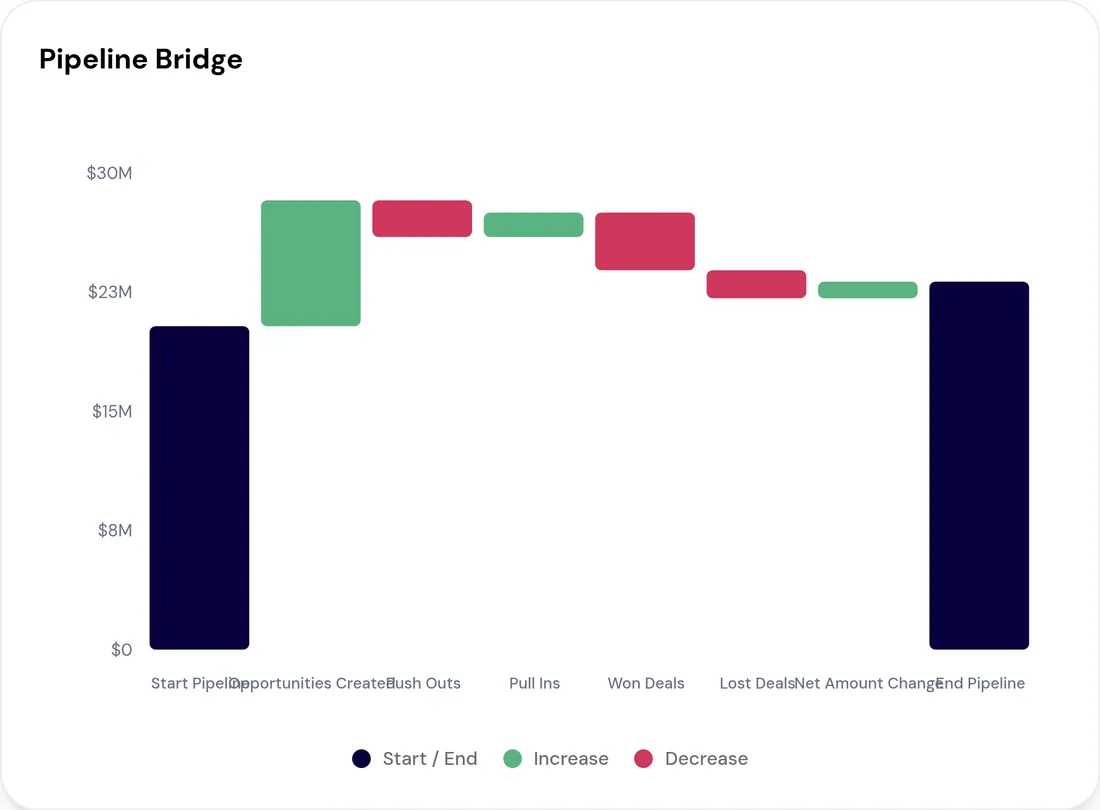
Pipeline movement compared period over period, covering created, advanced, won and lost, showing what actually changed. Screenshot of the RevTech application; sample data. Movement across a period. The weekly read is this, not a snapshot of the current total. - Step 2 of 3
Take the exceptions with you
The rule findings from the week are the agenda items nobody has to prepare. A set of deals sitting in the same stage past its threshold is a coaching conversation with the evidence already attached.
- Step 3 of 3
Finish on the team view
Sales Team is one row per person with attainment, commit, upside and pipeline. It is the surface the review should end on, because it turns a discussion about deals into a decision about who needs what.
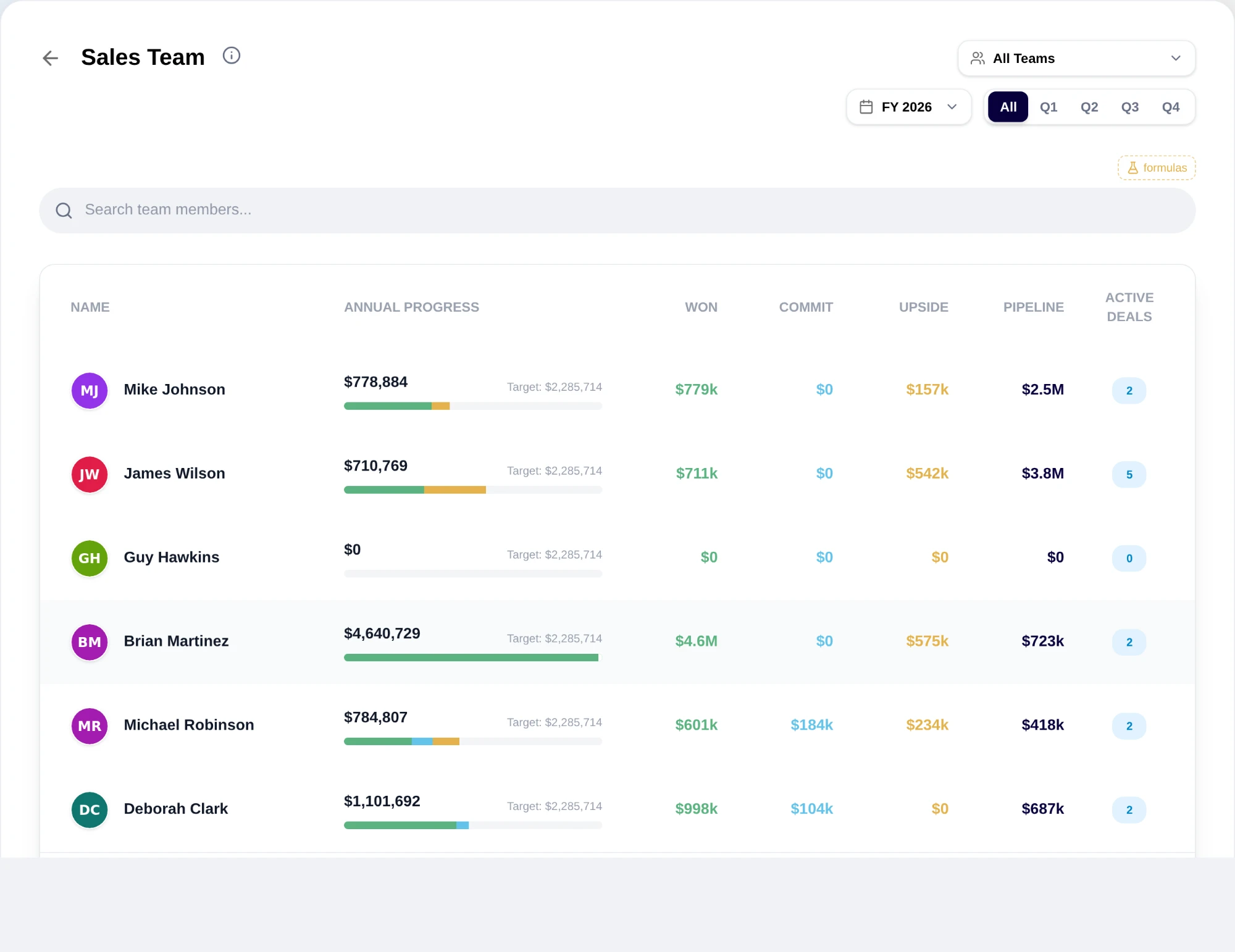
The Sales Team roster: attainment, commit, upside and active pipeline for each rep, so a manager starts a review with the same numbers everyone else sees. Screenshot of the RevTech application; sample data. One row per rep. Where a pipeline review turns into a coaching decision.
What to take away
- Source is an investment question, movement is the weekly read, won and lost is the honest one.
- Rule exceptions are agenda items that prepare themselves.
- End on the team view, or the review stays a conversation about deals rather than about people.
Go deeper
The material behind this
Try the demo.
See agents carry the repeatable work of GTM across sales, marketing, customer success, and RevOps. Every action prepared, reviewed, and recorded. Fictional data, real product.
Explore the demo