Reading an analyst answer properly
Every answer comes with its evidence. How to check one before you take a number into a meeting.
Product walkthrough
See it in RevTech
See how RevTech maintains the questions the business needs answered and returns the evidence behind every conclusion.
The quick answer is a claim, not a conclusion
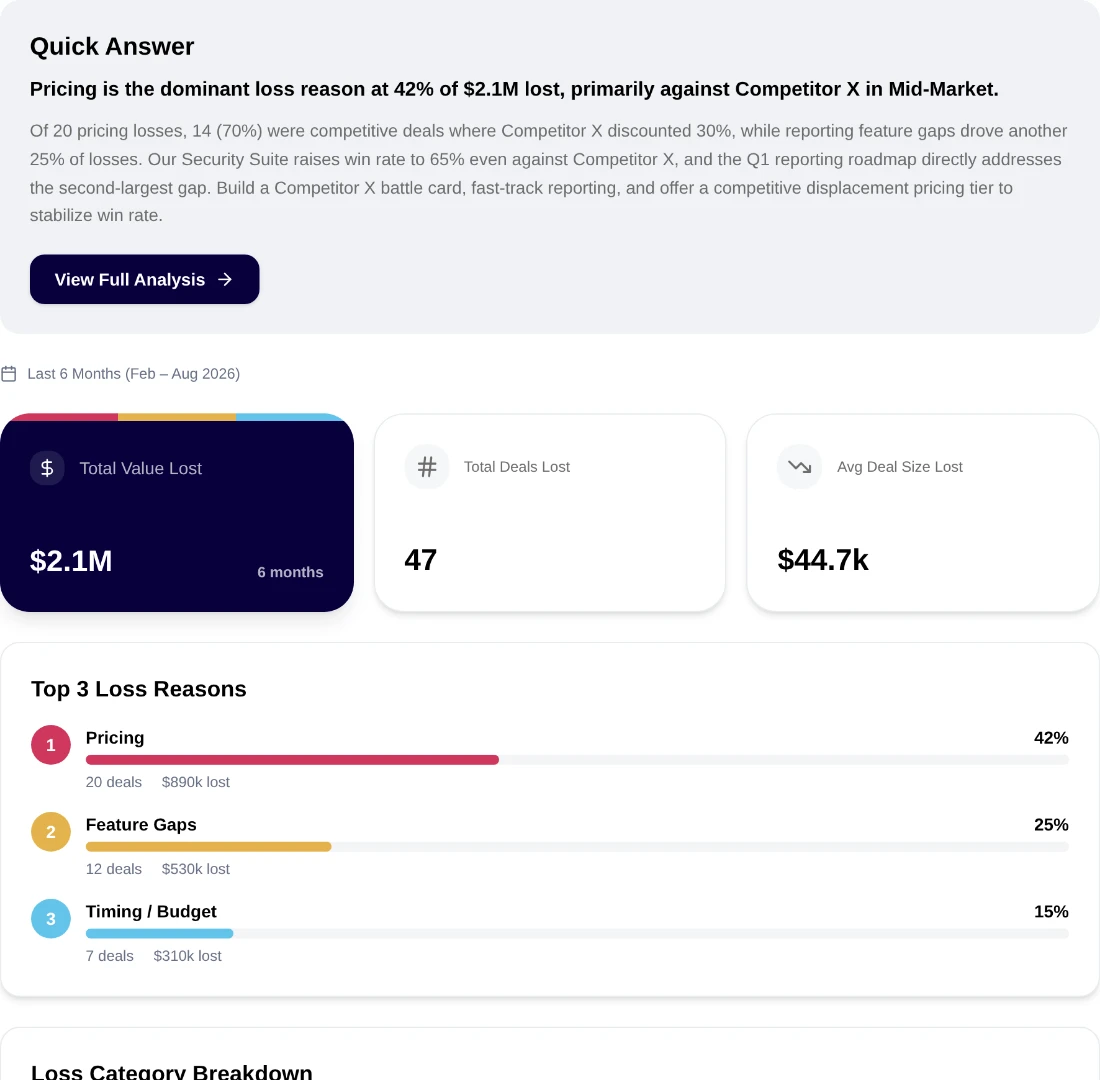
Every analyst answer opens with one sentence stating where things stand. That sentence is designed to be quotable, and that is exactly why it should not be the only thing you read before repeating it. Under it sits the reasoning, and under that the evidence: the sources drawn on and the records behind each figure.
The habit worth building is to open the evidence once for any number you are about to use in a decision. It takes a few seconds and it is the difference between reporting a figure and standing behind one.
Three things to check
You are not auditing the model. You are checking that the question it answered is the question you are asking.
- The period — a comparison is only meaningful on a consistent basis
- The scope — which teams, segments, or products the answer covers
- The record count — a confident conclusion drawn from four deals is not one
When the answer disagrees with your instinct
Sometimes the number is wrong. More often the definition is different from the one in your head. Your "qualified" and the model's "qualified" are different sets, and both are defensible. The evidence view is where that gets resolved, because it shows which records were included.
If the definitions genuinely differ from how your team works, that is a configuration conversation rather than an argument about the answer. Definitions are yours to set.
What to take away
- The quick answer is a claim. Open the evidence once for any number you will act on.
- Check the period, the scope and the record count before the conclusion.
- When the answer disagrees with your instinct, it is usually a definition difference, and definitions are yours to set.
Put it to work
Jobs this page is behind
- SellingLearn something real from a closed deal“I want to know why we win and why we lose, from evidence rather than from anecdote.”
- Forecast and planHear about a forecast change before the call“I want to find out the forecast moved when it moves, not at the weekly meeting.”
- DemandKnow whether marketing is on plan“I want to answer whether marketing is on plan without assembling it by hand.”
- Governance and administrationAnswer who changed this, and on what evidence“I want to reconstruct what happened and why, when somebody asks.”
- InsightGet an answer you can defend in the room“I want to answer a standing revenue question without commissioning an analysis.”
Try the demo.
See agents carry the repeatable work of GTM across sales, marketing, customer success, and RevOps. Every action prepared, reviewed, and recorded. Fictional data, real product.
Explore the demo