Slide 1 of 4
From the model to your calendar
The previous lesson explained the division of labor. This one is what it looks like on a Tuesday.
Turn the model into the shape of your actual week, and take away the one habit that decides whether any of this sticks.
The concept page told you what changes structurally. This guide tells you what changes in a working week: where prepared work shows up, what you do with it, and which habits separate teams who get value from this from teams who conclude it is noise.
It is placed second in the track deliberately. Read in the other order, the habits look like arbitrary process advice; read after the model, they are obviously the consequences of it.
Two things in the guide do most of the work. The first is the rhythm (working the queue at set points rather than whenever a notification arrives) and the second is rejecting properly rather than silently. Both sound minor. Both are the difference between the system improving and the system staying exactly as good as it was on day one.
Do not finish this lesson without picking your two times. A pass at the start of the day and one before you finish is enough for most roles, and the specific times matter less than that they exist. The next lesson asks you to work your own queue for a week, and it is a materially different exercise if you have decided when.
Now read the guide
This lesson is the orientation. The material itself lives on its own page, kept in one place so it stays current everywhere it is referenced.
You should be able to answer each of these from memory before opening it. Recalling the answer is what makes it stick; recognizing it when you read it does not.
Working the queue on a rhythm rather than reactively, and rejecting properly rather than silently. Both sound minor and both are the difference between the system improving and staying as good as it was on day one.
The two specific times of day you will work your queue, in the calendar. The practice week that follows is a materially different exercise if you have not.
The previous lesson explained the division of labor. This one is what it looks like on a Tuesday.
Teams that work the queue on a rhythm get value from this. Teams that work it reactively get an inbox they resent. The difference is not effort.
When your two passes will happen. Actually pick the times — the next lesson assumes you have.
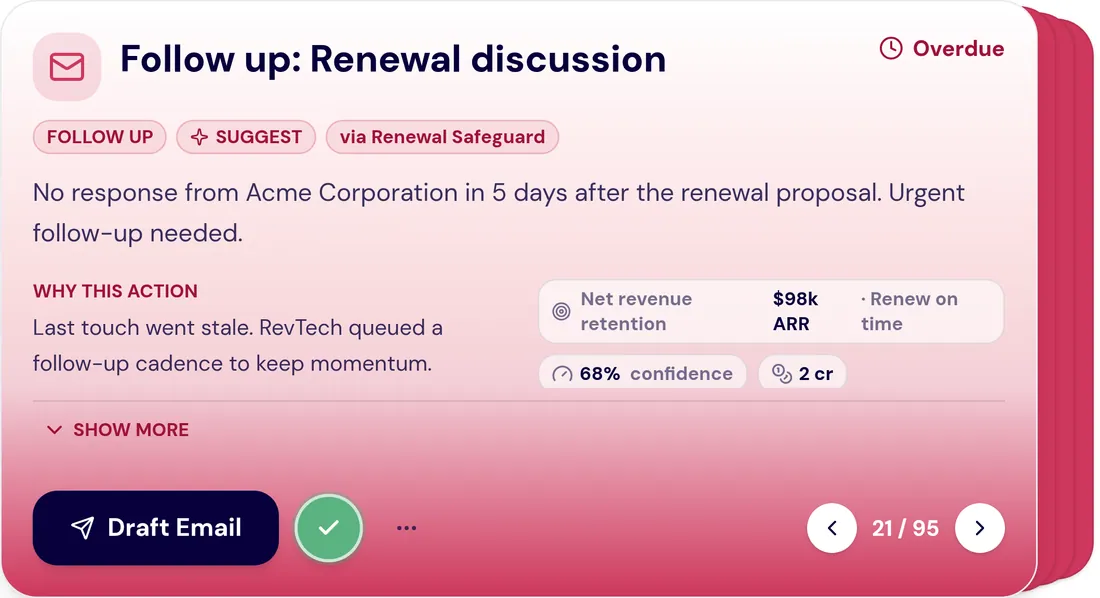
See agents carry the repeatable work of GTM across sales, marketing, customer success, and RevOps. Every action prepared, reviewed, and recorded. Fictional data, real product.
Explore the demo