Reading the KPI and performance surfaces
KPIs tell you how the company is doing. Team performance tells you who is carrying it. Neither moves a number, so the read has to end somewhere else.
Two questions, read in order
Performance is the weekly source of truth on whether the business is executing against its plan, and it asks two questions that are easy to conflate. The KPI view answers "how is the company doing?" The team reports answer "who is carrying it?" Read both before drilling into anything.
Taking them in the other order is how a review turns into a performance conversation about an individual when the actual problem is a company-level KPI that nobody has looked at. Scope to the fiscal year and quarter first so every card, table and chart is talking about the same period.
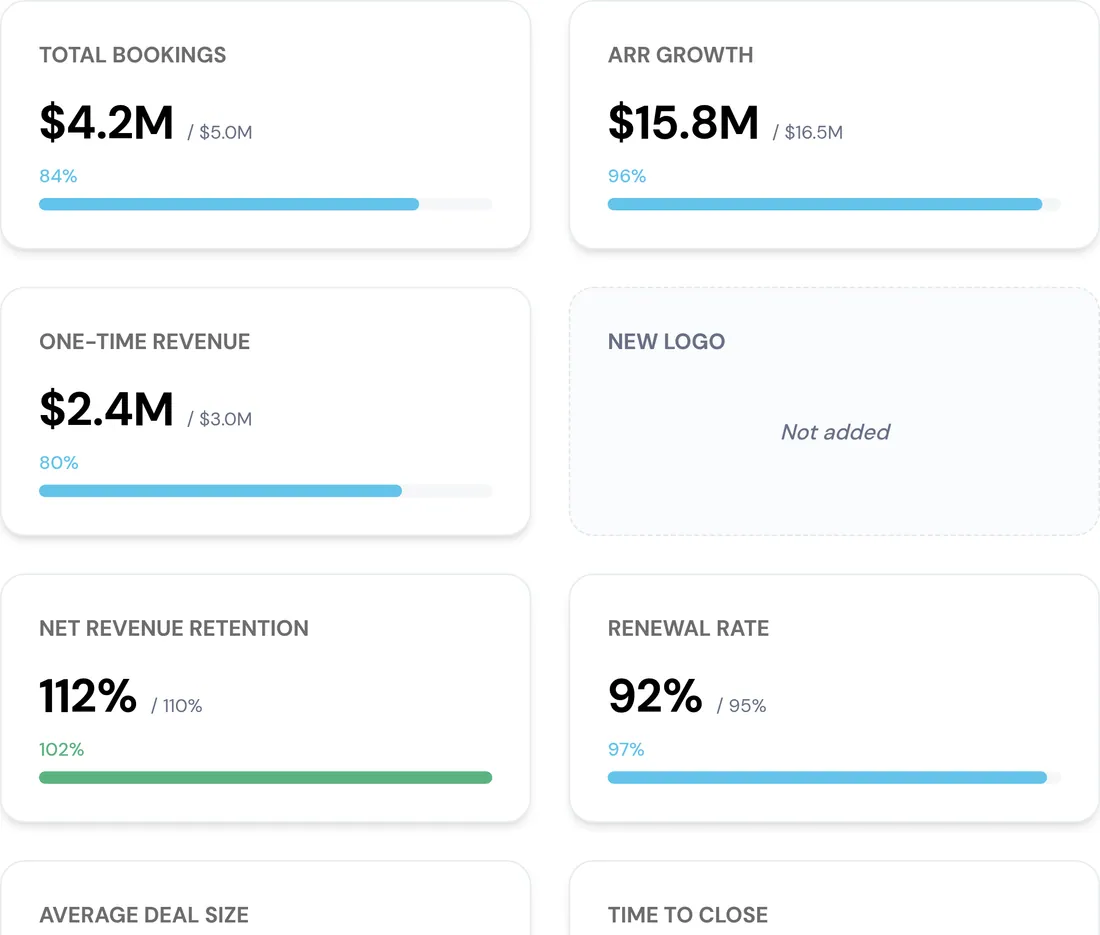
Reading a KPI card
The thresholds are deliberately blunt: at or above 100% reads green, below 80% reads red. Anything red is the conversation for the week, and the bluntness is the point. A scoreboard with six gradations invites a discussion about the gradations rather than the number.
A card reading "Not added" is different from a card reading zero, and confusing the two is the most common misread on this page. "Not added" means the KPI has no target set, so there is nothing to measure against. The fix is in Goals & Targets, not here.
From company to ownership
To move from a KPI to the people behind it, open the Sales Team or CS Team report: one row per person with attainment, commit and pipeline, and any row opens the deals behind the number.
That path — company KPI, then team, then deals — is what makes a coaching conversation specific. Starting at the rep row and working outwards produces the opposite: a conversation about an individual that never establishes whether their number is an outlier or the norm.
Your own KPIs
Individual contributors get the same read scoped to themselves: one card per KPI with actual, target and progress to goal, and a status pill reading on track, tracking or behind plan. The pill exists so colour is never the only signal, and the page is readable without relying on being able to distinguish red from green.
These are the individual targets set for your role in the cascade. If one looks wrong, it is an allocation question rather than a reporting bug.
Where a performance review has to end
Performance is read-only by design. It shows the number; it cannot move it. That makes the closing habit the whole value of the meeting: push what you saw into a play, a coaching action, or a targets adjustment.
A weekly review that ends with everyone agreeing the number is bad, and nothing created anywhere, has cost an hour and changed nothing. The three exits are all one click from here.
What to take away
- Scope to one period first, so every card on the page is talking about the same thing.
- Read KPIs and team performance together: how the company is doing, then who is carrying it.
- "Not added" is not zero — it means the KPI has no target, and the fix is in Goals & Targets.
- These surfaces are read-only. A review that does not end in a play, an action or a target change changed nothing.
Put it to work
Jobs this page is behind
Try the demo.
See agents carry the repeatable work of GTM across sales, marketing, customer success, and RevOps. Every action prepared, reviewed, and recorded. Fictional data, real product.
Explore the demo