Slide 1 of 4
You will be asked to prove things
Governance means being able to show how a conclusion was reached. That starts with being able to read one properly yourself.
Interrogate an analyst answer the way governance requires — checking the evidence and the question, not just the conclusion.
Governance is the ability to show what happened and why, which agents did what, on what data, and where a human approved it. That is an evidentiary standard, and it applies to your own reporting as much as to the agents. A governance lead who reports a number they cannot trace has failed at exactly the thing the role exists to do.
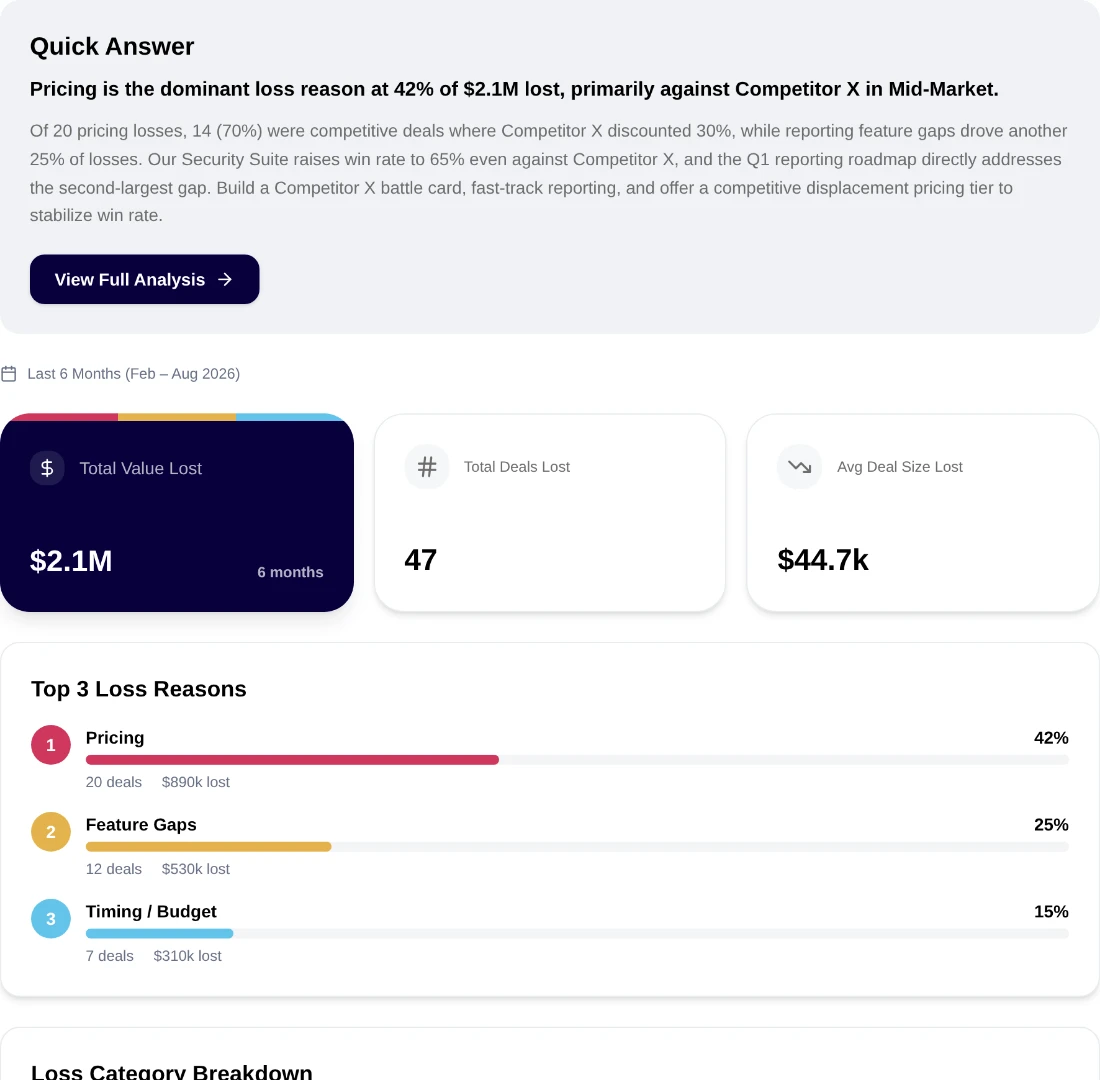
This guide is about interrogating an answer properly: reading the evidence and sources behind it, checking the period it covers, and noticing where it is precise versus where it is hedging. Those habits are what let you stand behind a figure when someone asks where it came from.
The most common error in reading these answers is subtle: the answer is entirely correct, for a question slightly different from the one the reader had in mind. A figure covering closed-won opportunities read as though it covered all opportunities, a period that runs to last week read as though it ran to yesterday.
Read the question as stated before reading the conclusion. It costs a few seconds and it eliminates most of the ways a correct answer becomes a wrong decision. It matters more here than anywhere, because the next lesson has you build an ongoing measurement practice on top of these answers, and a misread question at the start propagates into every subsequent report.
Now read the guide
This lesson is the orientation. The material itself lives on its own page, kept in one place so it stays current everywhere it is referenced.
You should be able to answer each of these from memory before opening it. Recalling the answer is what makes it stick; recognizing it when you read it does not.
Governance is an evidentiary standard, and it applies to your own reporting too. Reporting a number you cannot trace is failing at the thing the role exists to do.
Reading it as the answer to a slightly different question: a figure covering closed-won read as covering all opportunities, or a period running to last week read as running to yesterday. Read the question as stated before the conclusion.
Governance means being able to show how a conclusion was reached. That starts with being able to read one properly yourself.
Most wrong readings are correct answers to a slightly different question than the one the reader had in mind.
The next lesson has you build a measurement habit on this material. A number you cannot trace is a number you should not report.
See agents carry the repeatable work of GTM across sales, marketing, customer success, and RevOps. Every action prepared, reviewed, and recorded. Fictional data, real product.
Explore the demo