Report retention from one place
Gross retention, churn and revenue at risk on one surface; net retention and expansion on another. Why they are separate.
The job
“I want to report retention and net revenue retention without assembling them by hand.”
- CS leaders
- Finance
- RevOps
Net revenue retention is the number a board asks for and the number most capable of hiding a problem. A strong expansion quarter can carry a deteriorating gross retention number for two or three periods, and the deterioration only becomes visible when the expansion slows — which is the worst possible moment to discover it.
Reporting them together but separately is the discipline that prevents that, and it costs nothing beyond the decision to look at both.
What it moves
- Net revenue retention
- Gross revenue retention
- Revenue at risk
The division of labour
What RevTech does, and where you decide
In the product
How to do it
- Step 1 of 4
Check the contract field binding first
Retention, recurring revenue and net retention are all computed from your CRM’s contract value and date fields as bound in Settings. Reporting any of these without having checked that binding is a way to be confidently wrong.
- Step 2 of 4
Read gross and net as two reports
Retention carries gross retention, churn and revenue at risk. Expansion carries net revenue retention and expansion revenue by segment. Deliberately two surfaces, because a single blended number is exactly where the problem hides.
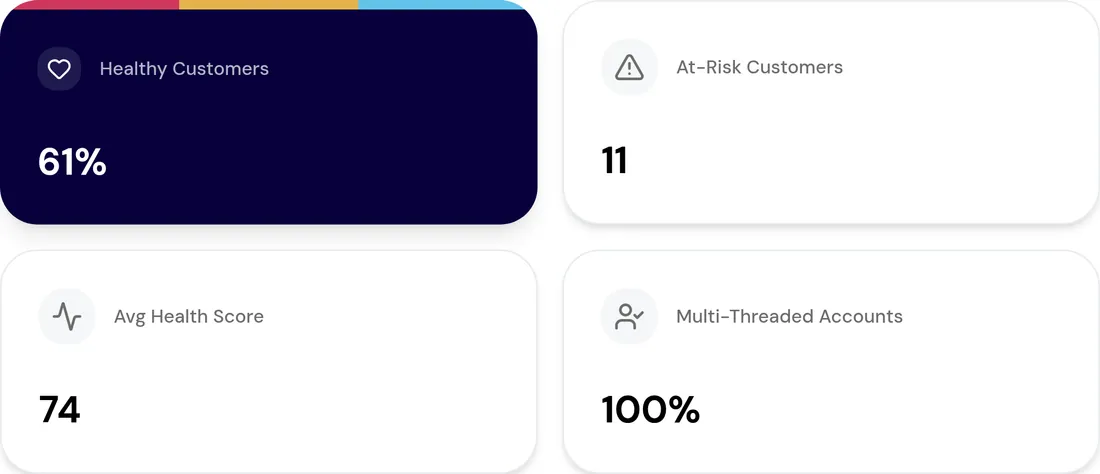
Headline customer health metrics across the book: totals, health distribution and the share of revenue at risk. Screenshot of the RevTech application; sample data. The customer surfaces. Gross and net answer different questions and are kept apart on purpose. - Step 3 of 4
Break net retention into its levers
Net retention moves for four separate reasons — churn, contraction, expansion and price. A change in the headline number is not a finding until you can name which of the four moved, because the four call for completely different responses.
- Step 4 of 4
Read it by CSM as well as by segment
The CS Team report carries net retention, renewals and expansion revenue by person. A book-level number that is fine while two people’s books are not is a coaching finding that segment-level reporting will never show you.
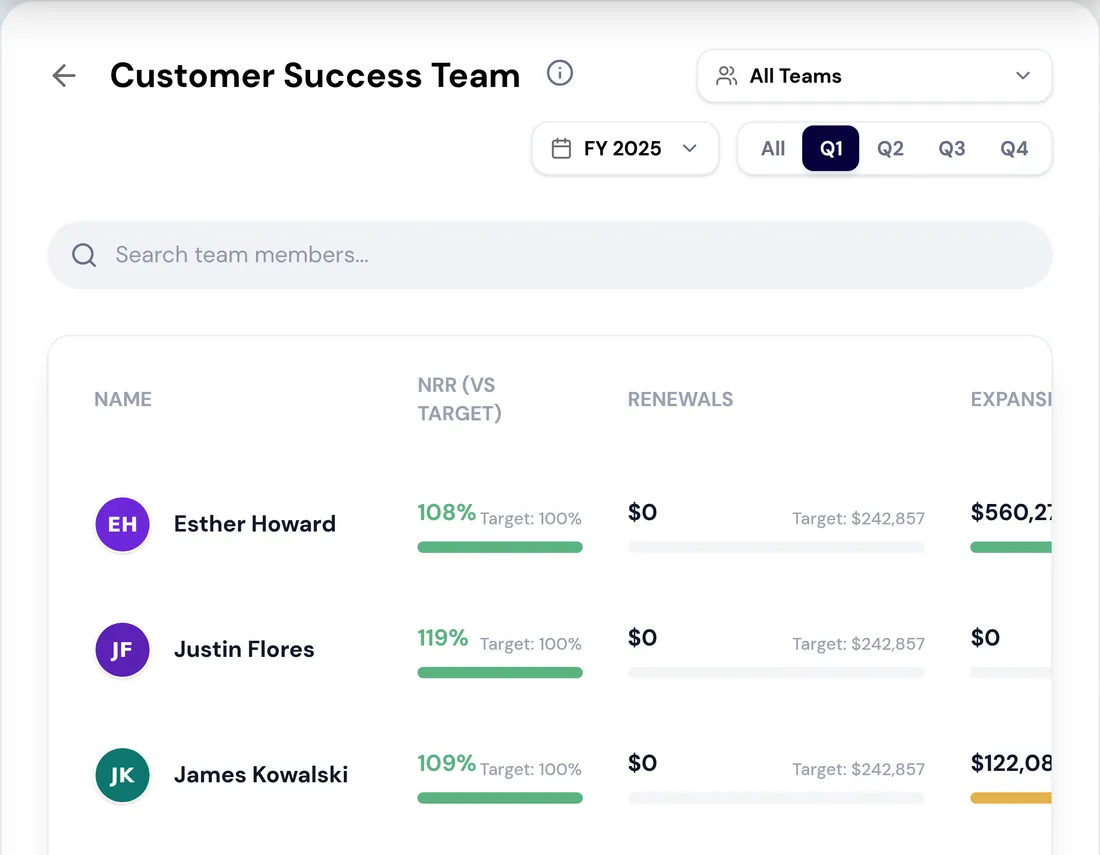
The customer success team roster: ownership, retention and expansion performance per CSM, so follow-through has a named owner. Screenshot of the RevTech application; sample data. Retention by owner. The read that turns a healthy book-level number into a coaching conversation.
What to take away
- Check the contract field binding before quoting any recurring number.
- Gross and net are two reports because a blended number is where the problem hides.
- Name which of the four levers moved, or the change is not yet a finding.
- By owner as well as by segment. A fine book average can contain two failing books.
Go deeper
The material behind this
Try the demo.
See agents carry the repeatable work of GTM across sales, marketing, customer success, and RevOps. Every action prepared, reviewed, and recorded. Fictional data, real product.
Explore the demo