Enablement
What is lead management?
Lead management is the process of capturing, qualifying, routing, and following up on prospects so demand becomes pipeline. It moves leads through stages, MQL to SAL to SQL, governed by routing rules and SLAs that define who acts and how fast. Leakage at any handoff loses revenue. In the agentic model, agents triage and follow up instantly, closing the gaps humans miss.
Definition
Turning demand into pipeline
Marketing generates interest; lead management turns that interest into qualified pipeline. It is the connective tissue between demand generation and sales: the process that decides which leads matter, who should work them, and how quickly.
Done well, no good lead goes cold and no rep wastes time on junk. Done poorly, expensive demand leaks away between the form fill and the first real conversation.
The lead qualification stages
Lead management runs on a shared vocabulary of qualification stages. The exact names vary, but the intent is consistent: express increasing confidence that a lead is worth sales time.
- MQL — a marketing-qualified lead that fits the ICP and shows intent
- SAL — a sales-accepted lead the rep agrees is worth pursuing
- SQL — a sales-qualified lead validated as a real opportunity
- Routing — the rules assigning each lead to the right owner
- SLA — the agreed time to first touch and follow-up
Where leakage happens
Revenue leaks at the seams of the process. Every handoff and delay is a chance for a good lead to go cold, and in the manual model those seams are everywhere.
- Slow response — leads go cold before the first touch
- Bad routing — leads land with the wrong owner or no owner
- Weak follow-up — one attempt, then silence
- Missing qualification — junk consumes rep time, good leads wait
- Broken handoffs — marketing-to-sales context is lost
The traditional model versus the agentic model
Traditionally, lead management depends on scoring rules, routing logic, and reps remembering to follow up. Response time is measured in hours or days, follow-up is inconsistent, and SLAs are honored when people are not busy, which is rarely.
In the agentic model, a lead-triage agent qualifies and routes leads the moment they arrive, and a follow-up agent runs consistent, personalized outreach against the SLA. Agents do the repeatable qualification and follow-up; humans handle the conversations that need judgment.
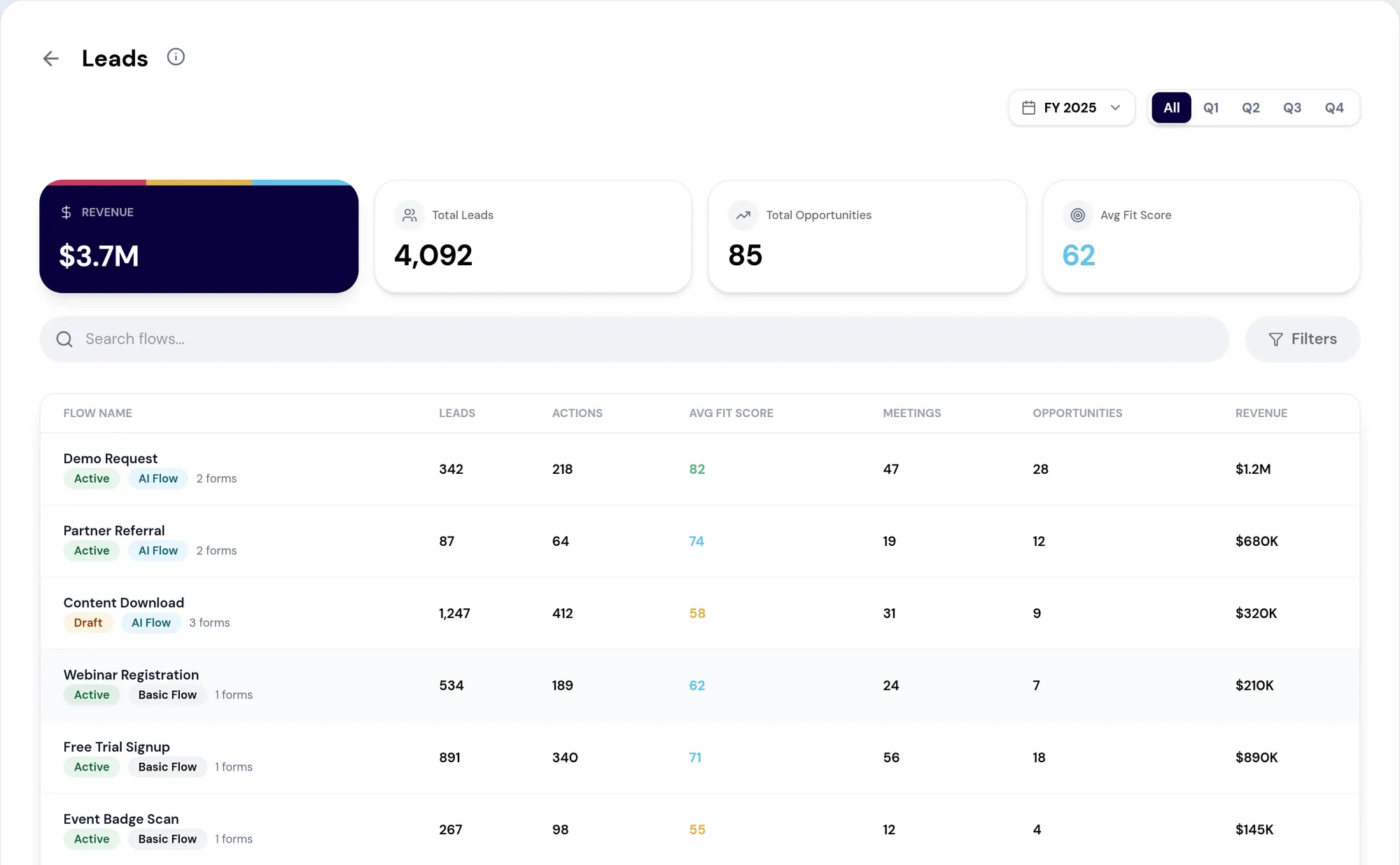
Metrics of lead management
The health of lead management is measurable at every stage of the funnel.
- Speed to lead — time from capture to first touch
- MQL-to-SQL conversion rate
- Routing accuracy and time-to-assignment
- SLA compliance on first touch and follow-up
- Lead leakage — qualified leads never worked
Frequently asked questions
Stop leaking qualified demand
Put triage and follow-up agents on every lead so nothing good goes cold and reps focus on real conversations.
Try the demo.
See agents carry the repeatable work of GTM across sales, marketing, customer success, and RevOps. Every action prepared, reviewed, and recorded. Fictional data, real product.
Explore the demoPut it to work
Jobs this page is behind
- Working the queueAnswer a reply with the right intent“I want to respond to a prospect reply quickly, and respond to what they actually said.”
- DemandMake sure no lead waits“I want to have every inbound lead enriched, routed and followed up inside the SLA.”
- DemandWork the best leads first“I want to know which leads are worth calling first, and why.”