Blog
Sales capacity planning: turn hiring dates into usable selling time
An approved headcount is not a full year of productive selling capacity.
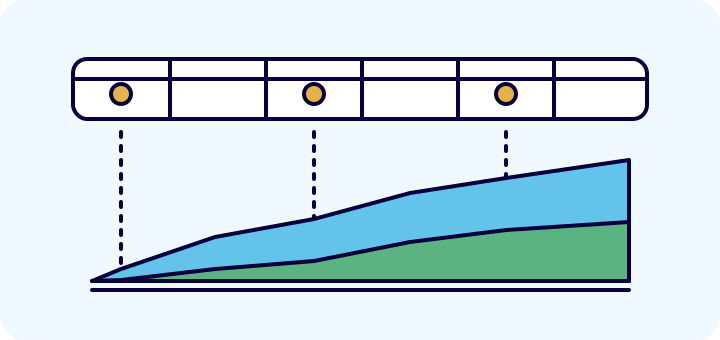
The annual plan includes four new sellers. Finance has approved the positions, the recruiting team has opened them and the revenue spreadsheet gives each hire a full quota. The plan looks funded. It has not yet explained when those people will be able to contribute.
A sales capacity plan should translate hiring dates, availability and ramp into usable selling time before attaching a bookings assumption. Headcount is an input. Capacity is time in which an appropriately supported seller can do the intended work. Expected bookings require a further judgment about opportunity supply, conversion and timing. Keeping those layers separate gives the CRO choices while there is still time to make them.
Start with the calendar the business can actually deliver
Use expected start dates rather than approved requisition dates. Include recruiting, notice and onboarding dependencies in the hiring plan, and identify who can update each assumption. A position approved in January and filled in April cannot provide January capacity, however urgent the target becomes.
For existing sellers, begin with available months and known changes to their role. Protect time for the work the plan requires: managing current accounts, prospecting, learning a new offer and coaching new colleagues. A seller who mentors two new hires may make the team stronger while carrying less individual selling capacity during the transition. Counting their full contribution in both places hides that trade-off.
Define what “fully productive” means for the motion. It might mean independently managing the agreed opportunity load, with the normal support available. It should not simply mean reaching a tenure milestone. The ramp assumption needs evidence from comparable hires, with small cohorts and differences in territory or experience acknowledged.
A fictional plan adds less capacity than headcount suggests
Consider a fictional business planning the first half of a year. It has six established sellers available for all six months, giving 36 full-capacity seller-months before other adjustments. Two new sellers are expected to start in April. For illustration, the company assigns ramp weights of 25%, 50% and 75% in their first three months. These weights are assumptions, not industry benchmarks or RevTech results.
Each new seller contributes 1.5 equivalent seller-months by June: 0.25 plus 0.50 plus 0.75. Together they contribute three. The total is therefore 39, not the 48 seller-months implied by treating eight sellers as available for the whole half. Even a plan that recognizes the April starts but assumes immediate full productivity would count 42 and overstate this modeled capacity by three seller-months.
Now move both starts from April to May. Each contributes 0.75 by June, for 1.5 combined; the total becomes 37.5. The additional hiring delay removes 1.5 modeled seller-months. It does not prove a specific amount of lost revenue. It shows precisely which part of the operating assumption changed.
Suppose the plan also requires one established seller to devote half of May and June to onboarding the hires. That removes another equivalent seller-month from their own capacity, bringing the delayed-start case to 36.5. The company can accept that trade-off, provide different support or revise the expected contribution. It should not count the mentoring and the original selling plan as if neither consumes time.
Do not multiply capacity by quota and call it a forecast
Quota is an assigned objective. A historical productivity assumption describes observed output under particular conditions. Neither guarantees that a new seller will inherit enough qualified opportunities, receive the right specialist support or close them within the period.
Build the commercial bridge separately. Identify the opportunity population a seller can work, how much of it is expected to be created versus inherited, and whether its buying cycle fits the calendar. A new enterprise seller starting in April may do valuable work in the first half that produces bookings later. That contribution belongs in the plan even when it does not rescue June.
Use ranges where the evidence is weak. A base case can use the expected start and ramp. A delayed-start case tests recruiting risk. A constrained-support case asks what happens if the manager or specialist team cannot absorb all hires at once. These are conditional operating views, not probabilities disguised as precise forecasts.
Make the constraint a leadership decision
A gap can justify earlier hiring, a smaller intake, a different territory assignment, additional onboarding support or a revised target. It does not automatically justify asking the existing team to absorb every missing month. State the work that would be displaced and the customer commitments affected.
RevOps can maintain the dated assumptions and bring actual starts and relevant CRM evidence into the review. RevTech’s managed preparation and Analyst workflows can support agreed recurring CRM questions, but this capacity model is an original planning method, not a claim of a shipped workforce optimizer. Hiring, ramp assumptions and resource choices remain leadership decisions.
Bring the next capacity review a bridge from approved roles to start dates, ramped time and commercially usable work. The most useful question is not “How many sellers will we have?” It is “Which contribution depends on a date or support commitment we have not yet secured?”
Put the framework to work
Explore the operating model.
Revenue downside scenario planning
Forward plan of seller availability and ramp, distinct from shared-deal downside exposure.
ExploreWhat changes for revenue leaders
Review the current scope and responsibilities relevant to this article.
ExploreAnalyst Agent
Review the current scope and responsibilities relevant to this article.
Explore
See how the work gets done.
Explore how agents prepare work across your revenue teams, and how people review it, guide it and decide what happens next. Fictional data. Real product.
Explore the demo