Blog
Plan Renewal Capacity Before the Calendar Gets Crowded
Translate renewal dates into the weeks when preparation, customer conversations and commercial reviews need capacity, with a worked planning example.
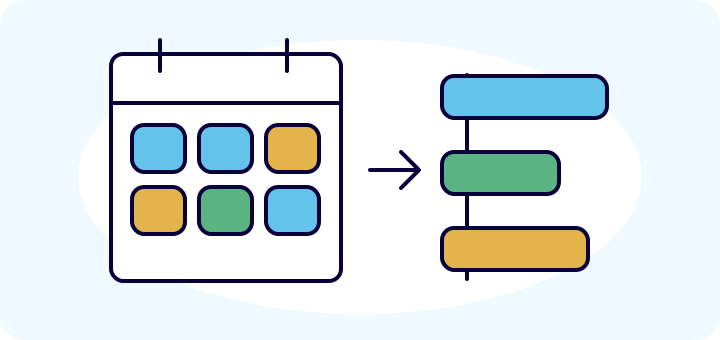
The renewal list looks manageable: twenty contracts next month, spread across three customer-success managers. Then the work arrives. Several customers need procurement documents in the same week, two executives are away and the legal reviewer can handle only a few nonstandard agreements. The count was balanced. The calendar was not.
Plan renewal capacity by working backward from the customer's decision and notice dates into the weeks when each role must act. Separate preparation, customer conversation, specialist work and commercial approval. A contract expiry report describes the portfolio. A capacity plan shows whether the organization can do the work that gives those customers a thoughtful, timely renewal experience.
Use the decision date that actually shapes the work
The renewal date is an important anchor, but it is rarely the only one. A customer may have a notice period, a budgeting meeting, an internal procurement cutoff or a deployment decision that changes when a conversation is useful. Have the appropriate owner verify contractual dates. Do not assume that a CRM close date captures the customer's full sequence.
Work backward from the consequential events. What needs to be understood before the customer makes its decision? Which proposal or evidence must arrive beforehand? Who has to review it internally? A value conversation delivered after the buyer has finalized its budget may be excellent preparation for the wrong moment.
Keep uncertain dates visible as planning uncertainty. If a customer committee date is unconfirmed, assign an owner to verify it and reserve a reasonable planning window rather than inventing precision. This gives the team a way to improve the plan. Leaving the date blank until it becomes urgent hides both the work and the risk.
Separate four different demands on the team
Preparation includes assembling current commitments, account context, commercial history and the questions the owner should resolve. Customer time includes listening, clarifying needs and discussing a renewal or revised scope. Specialist work may include a technical explanation, a support recovery commitment or legal review. Internal commercial decisions include pricing authority, terms and any exception that needs approval.
These demands are not interchangeable hours. A CSM with spare preparation time cannot necessarily replace the authorized commercial approver. A specialist may help several accounts but have only one useful review window. Counting the total workload across the department can therefore conceal the role that will delay every other step.
Gainsight's September 27, 2022 workload guidance points to customer lifecycle events as a source of changing CS demand. This article extends that general observation into a renewal planning method. It does not adopt a universal account-per-CSM ratio or claim that the estimates below fit another company's delivery model.
A fictional month shows why the weekly view matters
Imagine twenty renewals in a fictional software business. Twelve are standard continuation decisions. Five involve a scope change, and three require a recovery discussion. The team estimates remaining preparation, conversation and internal-review work from its own experience. These are hypothetical planning assumptions, not productivity benchmarks.
| Renewal type | Count | Preparation per account | Customer time per account | Internal review per account |
|---|---|---|---|---|
| Standard continuation | 12 | 1 hour | 1 hour | 0.5 hour |
| Scope change | 5 | 2 hours | 2 hours | 1.5 hours |
| Recovery discussion | 3 | 3 hours | 3 hours | 2 hours |
The total is thirty-one preparation hours, thirty-one customer hours and nineteen-and-a-half internal-review hours: eighty-one-and-a-half hours altogether. That total still does not establish feasibility. The work must be assigned to the weeks and people whose decisions the customer path requires. Some review time belongs to Finance, some to Legal and some to a CS leader.
Suppose six of the more involved accounts need an internal decision in the same week. Their combined review requirement is ten hours, but the relevant reviewers have six hours available after existing commitments. The monthly plan may have unused time elsewhere. The week still has a four-hour shortfall, and moving CSM preparation into that week will not solve it.
The team has several options. It could prepare two review packets earlier if the necessary facts are stable. It could ask for temporary review coverage from an authorized colleague. It could change the proposed commercial scope. Or it could discuss a different timeline with the customer where feasible. The capacity plan makes these choices visible before an urgent request turns them into favors.
Move the right work earlier
Preparation is often easier to move than the customer's decision. Assemble stable contract facts, known commitments and approved product information before the busiest period. Then refresh the changing facts close to the conversation. This avoids doing a full reconstruction at the last minute while recognizing that an old brief can be misleading.
Do not move every customer meeting earlier simply to smooth the internal chart. The right timing should make sense to the customer. A buyer who has not yet reviewed adoption or set a budget may not benefit from a premature renewal call. The useful adjustment might be an earlier question to confirm their decision process, followed by a better-timed commercial discussion.
Likewise, do not mark a review complete before its material inputs exist. A preliminary Finance view can expose concerns, but the final terms may still need authorization. Show preliminary and final decisions separately so the calendar does not look clear merely because future work has been relabelled as finished.
Reserve room for changes without making everything urgent
A renewal calendar will change. A sponsor leaves, a product issue appears or a customer expands the requested scope. The plan should contain a deliberate allowance for unplanned work, based on the team's experience and the consequence of a missed commitment. An arbitrary utilization target that fills every hour can make the plan look efficient while leaving no way to respond thoughtfully.
Use the weekly review to distinguish new work from a revised estimate of existing work. If one account's recovery discussion now needs a technical specialist, update that account's plan and the specialist's capacity. Do not create a second disconnected task that makes the same obligation appear twice. If a planned activity is no longer useful, remove it explicitly rather than let it linger as invisible backlog.
When the plan exceeds capacity, escalate a specific decision. “CS is overwhelmed” is understandable but difficult to act on. “Three customer decisions need the same reviewer by Thursday, and only one can fit; choose coverage or a revised commitment” gives leadership something concrete to resolve.
Test preparation support against the peak, not the average
RevTech's managed agents can prepare connected account context and recurring analysis within the agreed service. That can help a renewal owner arrive with the relevant history and open questions. The customer retains the relationship, commercial judgment and designated reviews. The current broader Customer Growth platform experience is labelled Coming Soon; this article does not assume a live automated renewal staffing system.
If you evaluate agent-supported preparation, start with a recurring packet whose inputs and acceptance are clear. Observe how much human review remains, what needs correction and whether the old assembly step actually stops. A draft that takes an hour to verify has not necessarily removed an hour of work. Faster preparation also does not create more availability in the Finance or legal review window.
Use any recovered capacity deliberately. It may let a CSM spend more time listening to a customer whose needs changed. It may allow earlier preparation of an involved renewal. It is not automatically a reduction in payroll or a guaranteed improvement in retention. The business case should describe the specific work changed and keep modeled capacity separate from measured outcomes.
Run one planning cycle before redesigning the whole book
Start with the next set of renewals that includes at least one crowded week. Have account owners verify the relevant dates and estimate the remaining work by role. Compare the peak with actual availability, including leave and existing commitments. Resolve one constraint while there is still time to choose among alternatives.
Afterward, compare the estimates with observed effort and missed dependencies. Do not use the review to rank CSMs by how little time they spent with customers. Ask whether the work was understood early enough and whether the chosen service was deliverable. A useful renewal calendar creates room for attention at the moment the customer needs it.
Sources and scope
Original planning framework and fictional calculation, reviewed October 16, 2026. Customer commitments and contract interpretation remain with the appropriate owners. No workload ratio or retention result is asserted.
- Gainsight, A Data-Driven Approach to Balancing Your CS Team Workload: https://www.gainsight.com/blog/a-data-driven-approach-to-balancing-your-cs-team-workload/
- RevTech customer-success solution: https://revtech.ai/solutions/customer-success
- RevTech customer-success workflows: https://revtech.ai/solutions/customer-success
Put the framework to work
Explore the operating model.
Build the renewal forecast
Separate the expected contract outcome from the work plan.
ExplorePrepare useful customer reviews
Keep customer conversations centered on decisions.
ExploreExplore account context
See the background managed agents can prepare.
ExploreReview customer-success workflows
Connect preparation with thoughtful customer attention.
ExploreGainsight workload guidance
Primary source checked October 16, 2026; supports the limited point described in this article.
ExploreKeep reading.
Build a Revenue Downside Scenario Around Shared Dependencies
Test which deals could move together, remove duplicate exposure and connect a downside scenario to a decision before the quarter becomes harder to change.
Read
Allocate an agent budget by the work people can use
Fund the next useful unit of work, including the people who must review and use it.
ReadSee how the work gets done.
Explore how agents prepare work across your revenue teams, and how people review it, guide it and decide what happens next. Fictional data. Real product.
Explore the demo