Blog
When onboarding stalls, locate the customer decision it is waiting for
A late task can be a symptom of a customer decision that was never made.
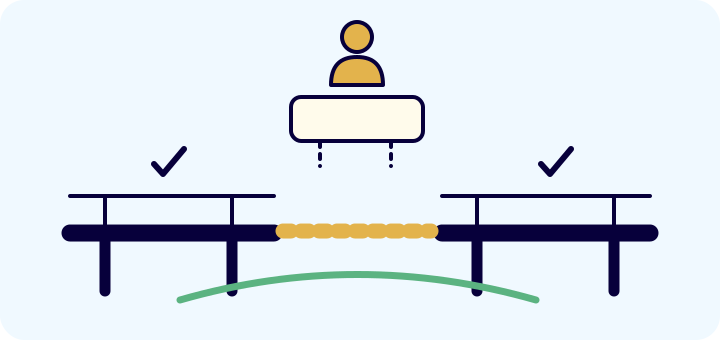
The onboarding plan is mostly green except for one customer-owned task. Every week, the CSM sends another reminder. The customer apologizes and moves the date. The project is now a month late, but neither side has named the decision that keeps the task unfinished.
When onboarding stalls, trace the blocked task to its prerequisite and decision owner. Determine whether the issue is capacity, authority, uncertainty about the work or a changed customer priority. Then agree a feasible next step, including rescoping or pausing when appropriate. More reminders help only when remembering is the problem.
Ask what the task requires from the customer
“Provide access” may require an internal security decision, an administrator’s time and a named business owner. “Upload the data” may require agreement on which records are appropriate and who can authorize their use. A task label can conceal a small project on the customer’s side.
Ask the contact to explain what must happen before they can complete it. Avoid treating the delay as unwillingness. The person may want the result while lacking the authority or capacity to produce the prerequisite.
Check whether your team made the requirement understandable early enough. A dependency revealed after kickoff is partly an onboarding-design issue, even if the customer must supply it. The remedy may include clearer preparation, a specialist conversation or a revised sequence.
Map the smallest path to a useful first result
Identify which tasks truly block the initial outcome and which can happen later. Do not remove requirements that protect security, correctness or the agreed service. Instead, ask whether a narrower approved scope can produce something useful while a broader dependency is resolved.
A staged approach should have a real customer purpose. Producing a demonstration just to turn the status green can distract from the outcome the customer bought. Keep demonstration, readiness and accepted first value distinct.
The customer should understand any trade-off. A smaller scope may reduce the available context or exclude a team. State what it can establish and what remains unavailable. Do not quietly substitute a weaker delivery and call the original commitment complete.
A fictional onboarding plan becomes workable
A company is onboarding a managed preparation workflow for three sales regions. The central data-access approval is pending because the customer has not assigned an owner for one source. The account sponsor keeps forwarding reminders but cannot settle that responsibility alone.
The CSM organizes a short dependency conversation with the sponsor and the relevant operations owner. They discover that one region already has an approved source set sufficient for a limited preparation workflow. The customer chooses to begin with that region while its internal owner resolves the broader source question. The service team confirms that the smaller scope is supported and documents what it excludes.
The plan now has two tracks: a bounded first-result review for the approved region, and a specific decision about the remaining source. The sponsor owns obtaining that decision; the service team owns delivering and validating the agreed limited work. The broader rollout date remains conditional rather than being silently kept on the calendar.
This fictional example illustrates a recovery conversation, not a guarantee that every source or regional scope is supported. The important change is that the blocked task now has an intelligible decision and a feasible path.
Escalate the constraint, not the customer
If the contact cannot resolve the issue, ask who can. Explain the consequence and the decision needed without turning the escalation into a complaint about responsiveness. “We need an owner for this approval to confirm the rollout scope” is more useful than “The customer has not completed its tasks.”
Bring options where possible: keep the original scope and revise timing, proceed with a supported smaller scope, obtain a specific resource or pause until the customer’s priority is clearer. The customer owns the business choice. Your team should make the implications understandable.
If the priority has disappeared, acknowledge it. Continuing to generate activity can consume attention while obscuring that the project no longer has a sponsor. A deliberate pause with preserved work and a return condition may be the most responsible outcome.
Learn from the blocked dependency
After recovery, inspect whether the prerequisite should have been identified during sales or pre-kickoff preparation. Update the relevant handoff or onboarding guidance. Do not add a new mandatory field for every unusual case; focus on patterns that change readiness.
RevTech’s current customer context and managed preparation can help assemble the account story and known commitments. Its broader Customer Growth experience remains a roadmap area, so this method does not assume an automated onboarding recovery engine. Confirm the actual service scope and source requirements with the operator.
At the next delayed task, stop before sending the same reminder. Ask what decision or resource would make completion possible. The answer gives the CSM a job that can change the project, rather than another date to chase.
Put the framework to work
Explore the operating model.
Customer usage decline diagnosis
First-use implementation dependency, distinct from post-adoption usage investigation or closed-won handoff.
ExploreRevTech for customer success
Review the current scope and responsibilities relevant to this article.
ExploreCustomer Context
Review the current scope and responsibilities relevant to this article.
ExploreKeep reading.
Build the ABM content plan around buying-group questions
Different stakeholders need different evidence, not five versions of the same campaign headline.
Read
When the buyer says there is no budget, find the unresolved decision
No budget can describe four different decisions, and a lower price answers only some of them.
ReadSee how the work gets done.
Explore how agents prepare work across your revenue teams, and how people review it, guide it and decide what happens next. Fictional data. Real product.
Explore the demo