Blog
Build the ABM content plan around buying-group questions
Different stakeholders need different evidence, not five versions of the same campaign headline.
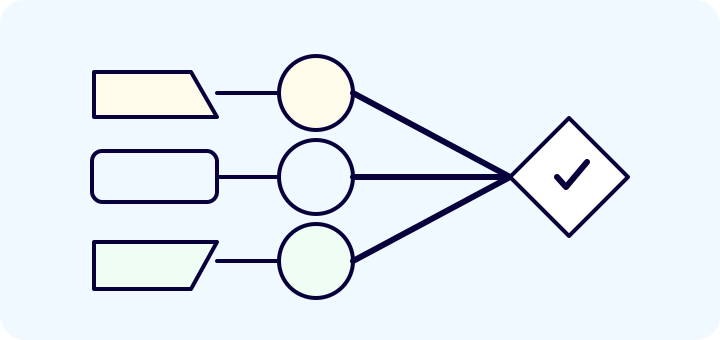
The account campaign has a finance asset, a technical asset and an executive asset. Each opens with the same promise and ends with the same demo request. The team has personalized the job titles without changing the evidence. The buying group still has to assemble its own case.
Build an account-based marketing content plan around one shared purchase decision and the distinct questions each participant must resolve. Keep the central proposition consistent, but vary the proof, depth and useful next step. The objective is a buying group that can discuss the same proposal intelligently, not a larger collection of role-labeled collateral.
Start with the decision the account is approaching
An early account exploring a problem needs different material from a buyer validating an agreed scope. Identify the current question: whether the problem matters, whether the approach fits, whether the operating responsibilities are acceptable or whether the proposed purchase is justified.
Do not infer that stage from a title or a single content interaction. Use the available account evidence and Sales’ current understanding. Where the buying process is unknown, the campaign should help discover it rather than pretending every stakeholder is ready for a commercial case.
Then identify the participants needed for that decision. A generic persona library is useful background, but the actual account may assign responsibilities differently. Finance might want to understand variable cost; an operations leader might be the budget owner; IT might care primarily about ongoing administration rather than architecture. Treat these as questions to verify.
Give each asset an evidence job
For a managed preparation workflow, the shared proposition might be that the team can arrive at customer conversations with useful context already assembled. The sales manager needs to see the resulting brief and how it fits the review. RevOps needs the source boundaries, responsibilities and exception handling. Finance needs the scoped workload, current pricing and assumptions behind any capacity estimate. A technical reviewer needs accurate access and data-handling information.
Those assets should agree on what the service does today. They should not each invent a stronger promise to fit a role. A finance slide claiming guaranteed savings and a technical document describing a limited evaluation cannot support one coherent decision.
Choose the smallest useful evidence form. A worked example may answer a manager’s question. A responsibility table may help RevOps. A documented source and permissions explanation may be more useful to IT than another marketing video. Format follows the question.
A fictional account changes the content order
Imagine a company evaluating account-preparation support for one enterprise sales team. The champion asks for an executive presentation. Sales learns that the next internal conversation is actually with operations and security, who need to understand which data is used and who handles exceptions.
Marketing prioritizes a current workflow walkthrough and a concise operating-responsibility explanation. The champion uses them to resolve the initial fit questions. Only after the scope is clearer does the team prepare a workload-based commercial case for Finance. The executive summary then presents a defined decision rather than asking leadership to endorse an abstract transformation.
This sequence is illustrative, not a claim that every account buys in that order. Its lesson is that the content plan should follow the account’s unresolved questions. Producing the executive asset first would have created polished material for a decision the group was not yet ready to make.
Make the assets usable together
Keep the same scope, terminology, assumptions and currentness across the set. If a capability is planned, it must remain planned in every asset. If the example uses fictional data, label it consistently. A recipient should not have to reconcile three versions of the offer before discussing it internally.
Provide a short route through the material. The champion can share the relevant answer without forwarding the entire library. Each asset should state which question it addresses, what it establishes and what remains to be confirmed.
Coordinate distribution with the account owner and the customer’s preferences. A content map is not permission to contact every person on an organizational chart. The existing multi-threading article addresses how to involve the buying group without undermining the champion; this method determines what evidence makes that involvement useful.
Review whether the content resolved a question
Ask Sales what the buyer understood, challenged or still needed after using the asset. A download or impression does not establish that a stakeholder’s concern was answered. Capture the actual question where appropriate and use it to improve the next version.
RevTech’s Campaign Management Agent can prepare campaign material from an agreed strategy and context. The team still owns the audience, the claims and the review of what each asset should accomplish. Verify current capability and source material before expanding a draft into several role-specific variants.
For the next named-account campaign, write one shared buying decision and three different evidence questions. If the proposed assets all answer the same question, the gap is in the plan, not the volume of content.
Put the framework to work
Explore the operating model.
Sales multithreading champion
Content evidence design after stakeholder mapping, not finding people or orchestrating introductions.
ExploreRevTech for Marketing
Review the current scope and responsibilities relevant to this article.
ExploreCampaign Management Agent
Review the current scope and responsibilities relevant to this article.
Explore

See how the work gets done.
Explore how agents prepare work across your revenue teams, and how people review it, guide it and decide what happens next. Fictional data. Real product.
Explore the demo