Blog
Investigate declining customer usage before choosing a response
A usage decline is a reason to investigate what changed in the customer’s work before deciding which intervention will help.
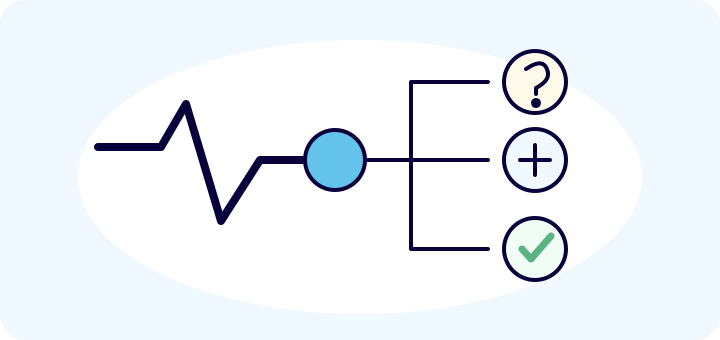
The account's weekly activity drops. A health indicator turns red and the CSM receives a task to schedule an adoption call. Before sending it, the CSM notices that the customer's operating team recently changed its reporting process. The decline may matter, but the proposed response is ahead of the explanation.
When usage falls, first establish what changed, for whom and over what comparable period. Then test whether the change reflects measurement, the customer's workflow or difficulty completing valuable work. Choose the intervention after that diagnosis. A risk label can organize attention; it should not substitute for understanding the customer.
This is not an argument for waiting until every uncertainty disappears. If a critical workflow is failing or a customer has asked for urgent help, act promptly on that evidence. The point is to make the response fit the problem instead of treating every downward chart as a request for more training.
Define the work behind the number
“Usage” can mean logins, active users, feature events, completed jobs or consumption. Each describes something different. A customer who needs fewer logins because a workflow became easier may be getting more value. A customer who continues to log in but cannot finish an important job may be in serious difficulty.
Start with the behavior the customer needs for its intended outcome. Identify the relevant users, teams or workflows and the expected cadence. A monthly planning task should not be judged by daily activity. A seasonal operating process needs a comparison that respects its season.
Check the population as well as the total. If a team shrank from twenty eligible users to ten, a decline in active users may reflect the organizational change. If twenty people remain eligible but only one team stopped completing the core task, the problem may be local and specific. The account total can conceal that distinction.
Keep missing observations separate from inactivity. An unavailable data feed does not establish that the customer stopped working. Resolve the measurement question enough to know what the signal means, while continuing to respond to any independently verified customer issue.
Reconstruct the sequence of changes
Put the decline on a short timeline with known account events. Look for a process change, new manager, product issue, completed project, access change or shift in workload. These are candidate explanations, not automatic causes. Their timing helps the CSM choose what to ask next.
Use the narrowest relevant comparison. An account-wide decline may begin in one region or one workflow. A stable account total may hide a sharp fall in the team that matters to the renewal. Compare like periods and like populations before deciding whether the change is broad or concentrated.
Then inspect what the customer has actually said. A support case about access, a manager's note about changing responsibilities or a recent success-plan discussion may explain the pattern. Absence of a complaint does not prove satisfaction. It may simply mean the people affected have not told your team.
Write the resulting observation without an emotional label: “Completed planning tasks fell in the northern region after the local owner changed.” That sentence opens a useful inquiry. “The account is disengaged” already sounds like a conclusion and makes it harder to notice an alternative explanation.
A fictional account reveals why the first response matters
Imagine a fictional customer using a service to prepare weekly account reviews. Its total completed preparations falls from forty to twenty-four across two comparable weeks. The figures are sample data, not a customer result. The initial recommendation is to run a refresher session for every manager.
The CSM splits the population. One region still completes its twelve weekly reviews. A second region completes twelve rather than fourteen because two account teams were consolidated. A third region completes none after its manager moved roles. The same total decline contains an expected operating change and a continuity problem.
The next conversation is with the third region's interim owner. The CSM asks who now runs the review and whether the prepared material still fits the team's process. The owner explains that the meeting continues, but nobody knows which colleague is responsible for checking the brief. The issue is ownership, not a lack of training across the whole account.
The customer names a reviewer, and both teams agree to inspect the next two cycles. The consolidated region's baseline is updated only after its new scope is confirmed. The account-wide training session is unnecessary. The intervention preserves the customer's time and creates a way to check whether the identified problem was actually resolved.
The diagnosis does not prove the renewal is safe. Other commercial or relationship questions may remain. It establishes a narrower, more useful fact: one cause of the usage decline has been understood and assigned a response.
Ask a question that can distinguish explanations
A generic “How can we help?” can be welcoming, but it often leaves the customer to reconstruct the situation. Bring a concise observation and a tentative explanation they can correct. For example: “We noticed the regional reviews changed after the team transition. Has responsibility moved, or is the preparation no longer useful in the new process?”
This wording leaves room for an uncomfortable answer. The customer may say the work no longer matters, the output is inadequate or a different approach is preferable. A diagnosis that only permits “we need more enablement” will miss those possibilities.
Do not overwhelm the customer with internal health scoring. Explain the work you are trying to understand and why you think the question could be useful. The relationship benefits when the customer experiences thoughtful attention rather than surveillance followed by an automated concern message.
If the account owner cannot reach the relevant operating person, treat access as an additional uncertainty. Ask the existing contact for the appropriate route and record what remains unknown. A scheduled check-in with the wrong participant may satisfy a task without resolving the question.
Prepare the context, keep the judgment with the CSM
RevTech's current customer-success workflows bring available customer signals, account history, issues, stakeholders and renewal context together. Fully managed agents can prepare the background and open questions from agreed connected sources so the CSM can spend more attention on the customer's explanation.
That preparation depends on what is actually connected and available. Do not assume a complete product-usage feed or automatic detection of every organizational change. The prepared brief should identify the evidence it uses and the gaps that matter to the decision. The broader Customer Growth platform experience remains labeled Coming Soon; current context preparation should be evaluated on its own scope.
The customer team chooses the response and controls the relationship. Where an action requires review under the configured rules, it stays pending until approved. A prepared risk hypothesis is not a verified customer intention, and a proposed intervention is not a completed recovery.
Check the explanation after you act
Define what you expect to observe if the diagnosis is correct. Restored ownership might produce completed reviews and feedback from the new reviewer. A product fix might restore the affected task. A deliberate reduction in scope might establish a lower, appropriate baseline. The check should follow the work, not require every chart to return to its old level.
If the evidence does not change as expected, revisit the explanation. The ownership gap may have concealed a larger problem, or the customer may have agreed to a next step without the capacity to carry it out. Keep the original observation and the subsequent learning visible rather than repeatedly closing and recreating the same risk.
For your next usage alert, write one neutral observation, two plausible explanations and one question that would help distinguish them. That small preparation can turn a routine adoption call into a conversation that respects what the customer is actually trying to do.
Frequently asked questions
Put the framework to work
Explore the operating model.
Build the renewal forecast separately
Connect account evidence to a dated commercial judgment.
ExploreCustomer Context
See the context available for prepared account work.
ExploreRevTech for customer success
Explore current customer context and renewal preparation.
ExploreTurn a business review into a decision
Use the customer conversation to agree what changes next.
ExploreKeep reading.
Design a campaign around the decision you want to learn
A campaign becomes a useful experiment when the team agrees which decision the evidence can change before production begins.
Read
Will a renewal concession solve the customer’s problem?
A renewal concession is useful only when it addresses the customer’s reason for hesitating; unresolved delivery work needs its own accountable remedy.
ReadSee how the work gets done.
Explore how agents prepare work across your revenue teams, and how people review it, guide it and decide what happens next. Fictional data. Real product.
Explore the demo