Enablement
What is the RevOps operating model?
The RevOps operating model is the framework that keeps go-to-market executing predictably. It rests on four pillars, systems, data, process, and governance, run on a regular operating cadence. Together they define how work flows, how decisions get made, and how the revenue organization stays aligned. In the agentic era, this model becomes the blueprint for how humans and agents work.
Framework
Four pillars plus a cadence
A RevOps operating model is not a tool or an org chart — it is the design of how the revenue engine runs. Strong models make the same four pillars explicit and connect them through a recurring rhythm of review and decision-making.
- Systems — the CRM and connected GTM stack agents and people work in
- Data — the definitions, quality, and context that make the systems trustworthy
- Process — how leads, deals, renewals, and partners actually move
- Governance — permissions, approvals, and auditability over the work
- Cadence — the weekly, monthly, and quarterly rhythm that ties it together
The traditional operating model
In the human-only model, each pillar is maintained by people. RevOps configures the systems, cleans the data by hand, enforces process through training and reminders, and governs through spreadsheets and approvals routed over email. It works, but it scales linearly with headcount and breaks down under fragmentation.
The failure mode is familiar: disconnected tools, stale data, inconsistent process, and governance that only exists on paper. Coordination consumes the time that should go to selling and serving customers.
How the agentic model reshapes each pillar
Agentic GTM does not replace the four pillars — it changes who does the work inside them. Agents connect the systems, keep the data current, run the process, and execute within governance, while humans manage exceptions and approvals.
- Systems — RevTech connects the CRM and stack into one operating layer
- Data — a GTM context layer keeps records complete and grounded
- Process — agents run repeatable steps consistently, every time
- Governance — every action is permissioned, logged, and reviewable
- Cadence — agents prepare the inputs; humans make the decisions faster
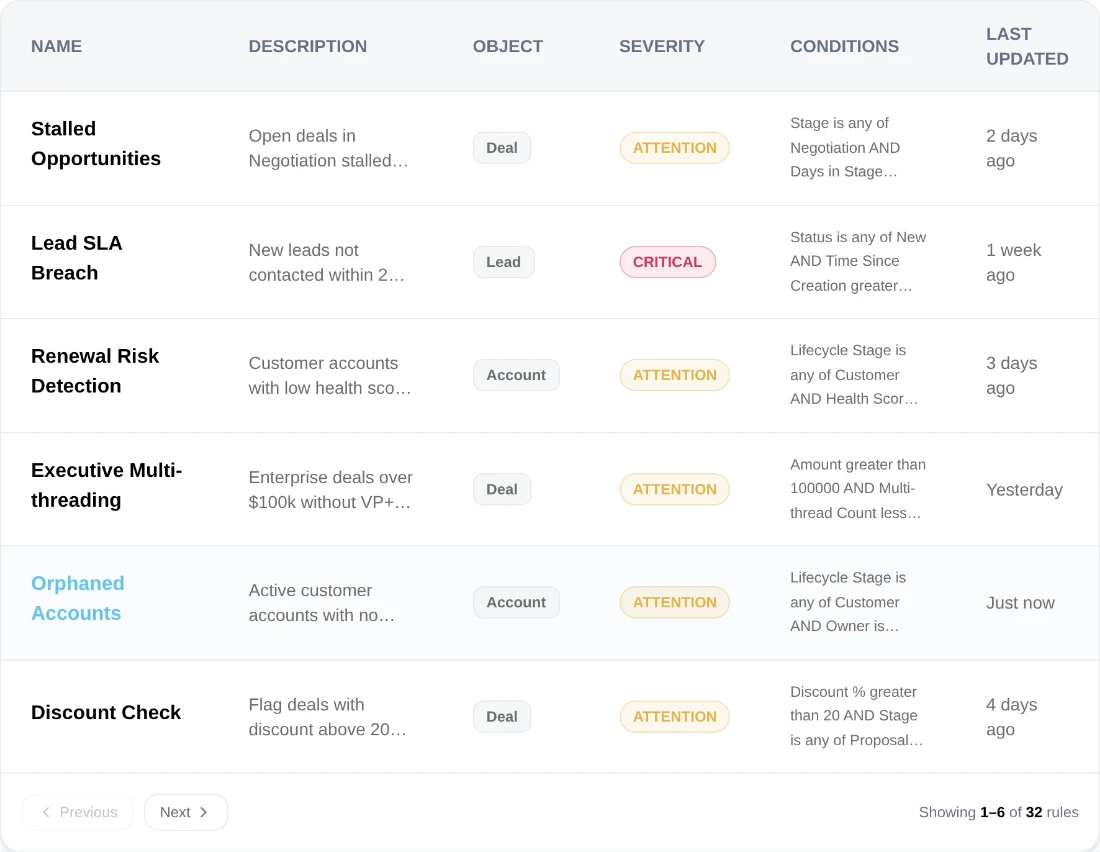
RevOps architects it; GTM works through it
The operating model is where RevOps earns the title of architect. RevOps designs the systems connections, the data definitions, the process flows, and the governance rules, and the entire GTM organization works through that model. RevTech is the infrastructure that makes the design executable without hand-built glue.
Signs of a healthy operating model
You can tell a good operating model by its outputs, not its documentation.
- One trusted source of truth across GTM teams
- Data complete enough to run forecasts and agents on
- Process that runs the same way regardless of who is involved
- Governance that produces a real audit trail, not a paper policy
- A cadence that turns review into decisions and action
Frequently asked questions
Design an operating model built for agents
Connect systems, ground data, run process, and govern the work, with RevTech as the operating layer.
Try the demo.
See agents carry the repeatable work of GTM across sales, marketing, customer success, and RevOps. Every action prepared, reviewed, and recorded. Fictional data, real product.
Explore the demo