Enablement
What is a GTM operating cadence?
A GTM operating cadence is the recurring rhythm of reviews and decisions that keeps go-to-market aligned and accountable: weekly deal and pipeline reviews, monthly business reviews, and quarterly planning. It turns data into decisions on a schedule. In the agentic model, agents prepare the inputs continuously so cadence meetings become decision-making, not status reporting.
Definition
The rhythm that keeps GTM aligned
Alignment is not a one-time event; it decays without a rhythm to renew it. A GTM operating cadence is that rhythm: the recurring reviews where the revenue organization inspects performance, surfaces risk, makes decisions, and commits to action across sales, marketing, CS, and partners.
Cadence is the fifth element of the operating model. Systems, data, process, and governance define how work happens; cadence is when the organization steps back, looks at the whole, and decides what to do next.
The three operating rhythms
A healthy cadence layers three time horizons, each with a distinct purpose.
- Weekly — deal and pipeline reviews; inspect risk and drive next steps
- Monthly — business reviews; assess funnel health, forecast, and trends
- Quarterly — planning; set targets, capacity, territories, and priorities
- Annual — strategy; align GTM plan, segments, and investment
The traditional model: cadence as status meetings
The failure mode of operating cadence is the status meeting. Hours go into assembling decks and pulling reports. The meeting is then spent reciting numbers everyone could have read, and little time is left for the decisions that actually matter. Preparation is manual and the data is often stale by the time it is presented.
The rhythm exists, but it produces reporting instead of decisions — and consumes the time of the people it is meant to make more effective.
How the agentic model sharpens cadence
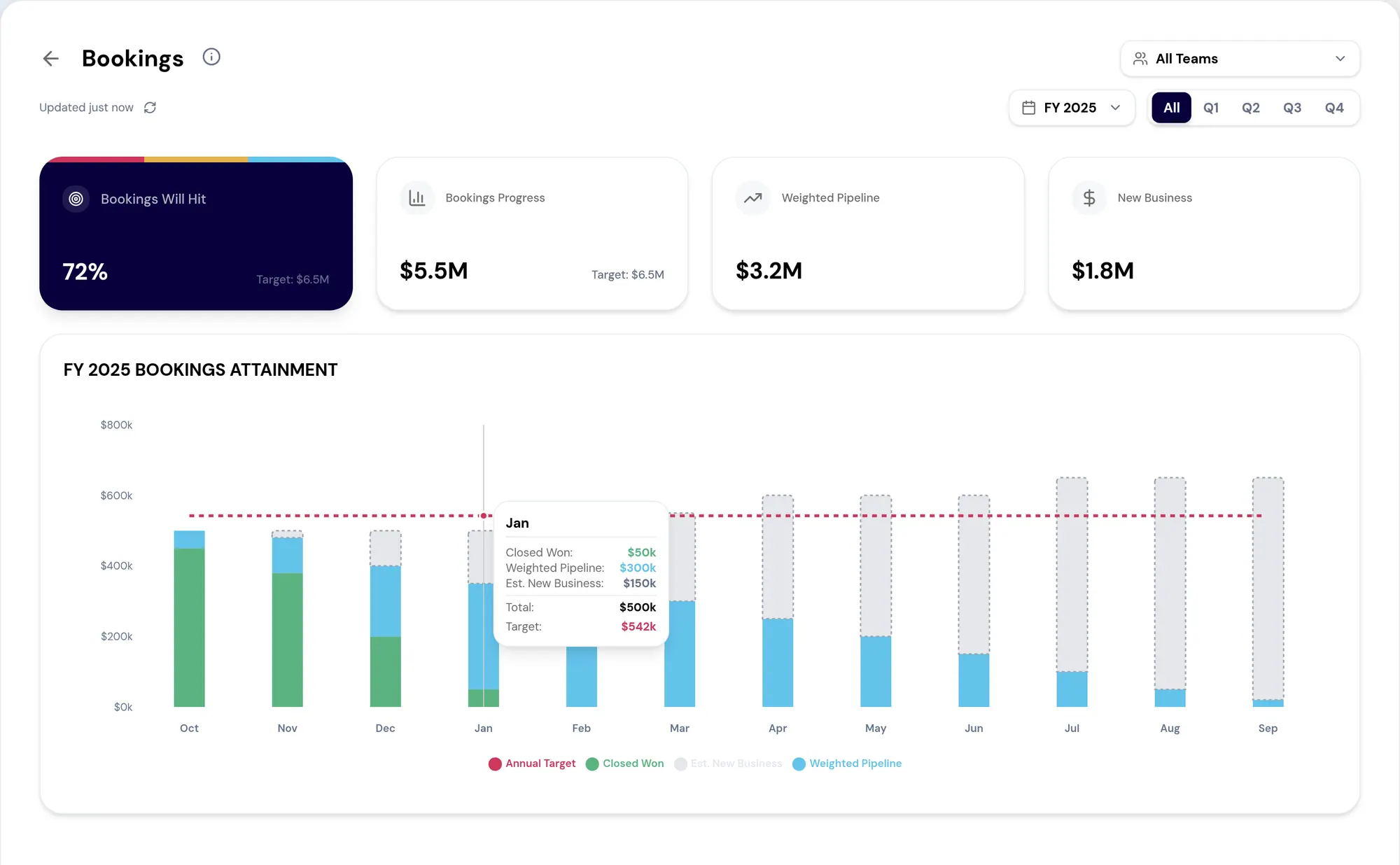
Agents prepare the inputs to every cadence continuously and automatically. Pipeline inspection, forecast risk, and account and customer health are assembled and current before the meeting starts, with the reasoning attached. An executive-briefing agent can package the state of the business for a review in minutes, not days.
That inverts the meeting: instead of building and reciting the picture, leaders arrive with it and spend their time deciding. Agents do the repeatable preparation and analysis; humans make the decisions and manage the last mile.
What a strong cadence produces
You can tell a working cadence by what comes out of it, not how polished the deck is.
- Decisions and owners, not just status updates
- Risk surfaced early enough to act on
- Consistent alignment across sales, marketing, CS, and partners
- Less time preparing reports, more time deciding
- A clear line from review to action to result
Frequently asked questions
Make cadence about decisions, not status
Let agents prepare every review so your operating rhythm produces action instead of reporting.
Try the demo.
See agents carry the repeatable work of GTM across sales, marketing, customer success, and RevOps. Every action prepared, reviewed, and recorded. Fictional data, real product.
Explore the demoPut it to work