Enablement
What is Agentic GTM governance?
Agentic GTM governance is the set of controls that make agentic work safe at enterprise scale: scoped permissions, human review and approvals, audit trails, data controls, and observability. It ensures agents act like workers with permissions rather than chatbots with open-ended freedom, and that leaders can always see what agents did, what data they used, and where humans approved the work.
Governance as power
Control is what makes agentic GTM scalable
Governance is not a tax on agentic GTM — it is what makes agentic GTM possible at enterprise scale. Without control, agents are a liability: shadow AI acting on customer data with no oversight. With control, agents become a governed workforce you can trust and expand.
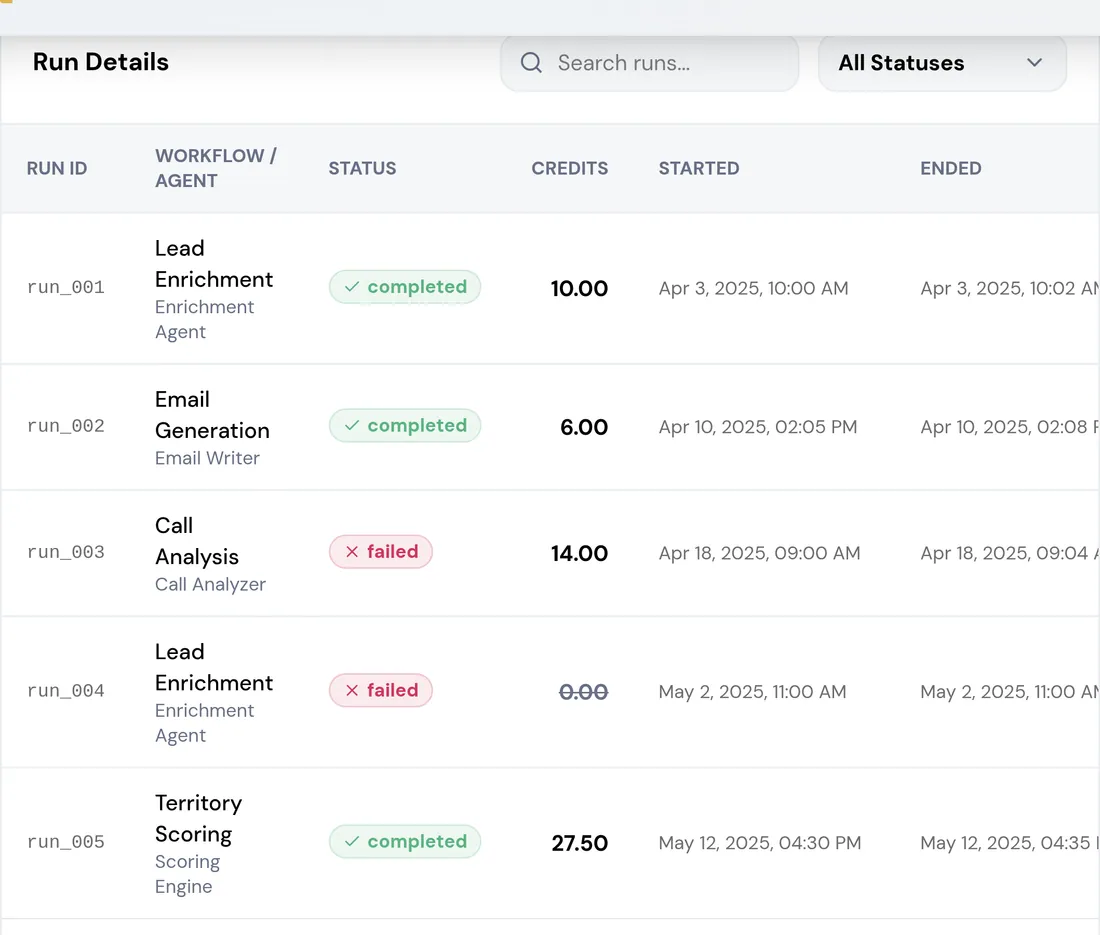
The right framing is governance as a feature of power. RevTech gives leaders visibility into what agents did, what data they used, and where humans approved the work, turning agentic execution into something enterprises can actually run.
Why the old model of AI adoption is risky
When teams adopt AI tool by tool, governance fragments. Every tool has its own access, its own logs (or none), and its own idea of what an agent can touch. The result is ungoverned, unobservable AI activity spreading across your GTM stack, which is the definition of shadow AI.
Agentic GTM governance replaces that with one control layer over every agent, workflow, and action, so security, IT, and RevOps can see and govern all of it in one place.
The pillars of agentic GTM governance
Effective governance combines several controls. Each answers a distinct question about how agents are allowed to work.
- Permissioning — what can this agent access, by user, role, policy, and workflow
- Data controls — which objects, fields, and records agents may touch, with PII and retention boundaries
- Human review & approvals — where a person must approve, edit, reject, or escalate
- Audit trails — who initiated, reviewed, approved, and changed what, plus the data and model used
- Observability — activity, model usage, workflow performance, and business impact
- Agent evaluation — quality, accuracy, rejection rate, and regression detection
Agents need permissions like workers, not freedom like chatbots
The governing principle is that an agent should be scoped like an employee. You would not give a new hire unrestricted access to every record and the ability to email any customer without review. Agents are the same: they get least-privilege access and act within approval paths.
This is what separates an enterprise-grade agentic operating layer from a chatbot with API keys. Permissions, review, and audit are enforced on every action, not left to trust.
What to measure and report
Governance should be observable and provable, not aspirational. Report on the controls that demonstrate agentic work is safe and attributable.
- Coverage of audit trails — share of agent actions fully logged and attributable
- Approval adherence — high-risk actions passing through required review gates
- Access scope — agents operating within least-privilege permissions
- Rejection and escalation rates — human oversight catching and correcting output
- Data-boundary compliance — agents touching only approved objects and fields
Common governance mistakes
Most governance failures come from treating control as an afterthought rather than a design principle.
- Granting agents broad access instead of scoped, least-privilege permissions
- Deploying agents before audit trails and review gates exist
- Assuming a model provider’s controls are enough for enterprise GTM
- Leaving IT, security, and compliance out of the operating-model design
- Measuring output but not who approved it or what data was used
Frequently asked questions
Enterprise control for agentic GTM
Govern every agent, workflow, and action, with permissions, human review, and audit built in.
Try the demo.
See agents carry the repeatable work of GTM across sales, marketing, customer success, and RevOps. Every action prepared, reviewed, and recorded. Fictional data, real product.
Explore the demoPut it to work