Blog
A phased purchase needs more than a smaller first deal
Qualify the next tranche against its own release decision before allowing the original ambition back into the forecast.
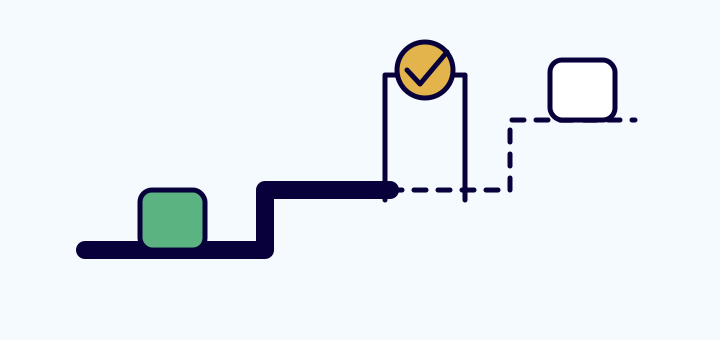
The buyer still wants a company-wide rollout. It now wants one region first, with the rest subject to that region succeeding. Sales reduces the immediate proposal but leaves the original amount in a later opportunity. The forecast has acquired a second decision without anyone checking who can make it or when.
Treat the later phase as a conditional purchase until its release requirements are established. Preserve the buyer’s wider ambition, but give each incremental scope its own evidence, decision window and forecast treatment. A successful first phase can make the second possible without making it approved.
Find the decision hidden inside “if this works”
Ask the buyer what the first phase is meant to establish. Is the condition technical acceptance, a business outcome, funding, executive sponsorship or simply confidence? Those are different gates. A working implementation may satisfy the technical team while leaving the budget decision untouched.
Then identify who accepts the result and who releases the next purchase. The same person may do both, but do not infer that from their title. Record the evidence the buyer expects, the earliest review date and any further purchasing steps. The question is whether a credible path exists from the first phase to a separately authorized commitment.
Also establish whether later scope is genuinely optional. A signed agreement with scheduled delivery phases differs from an unsigned possibility dependent on another decision. Have the appropriate commercial owner establish the agreement’s meaning. This method concerns open purchase decisions; it does not decide accounting treatment or interpret contract obligations.
A fictional rollout crosses the quarter boundary
A fictional buyer discussed a $240,000 rollout across three regions. It now proposes $80,000 for the first region and will consider the remaining $160,000 after reviewing the initial outcome. These illustrative amounts use the same commercial-value definition; they are not recognized revenue.
The first region can begin on November 23. The buyer needs six weeks of use before its operations director can assess the result. Even if that assessment succeeds at the earliest possible point, it occurs in January. The finance owner then needs to release the remaining budget. A December close date for the second phase has no supported path.
The seller can continue useful planning with the later regions. It can learn their requirements and establish who would participate in the decision. That work does not remove the acceptance dependency. The CRO should not include $240,000 in the current-period call merely because the original proposal carried that amount.
| Scope | Commercial amount | Evidence needed |
|---|---|---|
| First region | $80,000 | Current approval path and agreed scope |
| Remaining regions | $160,000 | First-phase acceptance, budget release and next buying decision |
| Whole original ambition | $240,000 | Reference total; never additive to its parts |
Make the first gate necessary without calling it sufficient
Suppose the first phase succeeds in January. Do not automatically promote the remaining $160,000 into the same confidence category as the first purchase. Ask what the acceptance actually authorizes. It may permit an evaluation, release funding or authorize negotiation. Each advances the buyer differently.
A practical admission rule should name the missing evidence. For this example, the later phase becomes eligible for the relevant forecast judgment only after the buyer confirms acceptance, the budget owner confirms available scope and the account team establishes the remaining approval window. The company still applies its normal forecast policy; this is not a substitute probability model.
If acceptance fails or the buyer changes the success measure, retain the reason and reassess the later opportunity. An unchanged amount with a repeatedly moved close date hides a change in commercial support. A future phase should not remain forever “almost ready” because the first purchase closed.
Keep the opportunity structure from rewriting the purchase
Some CRMs can represent components on one opportunity; others work better with linked records. Choose a maintainable structure that preserves the original scope, current released scope and genuinely incremental future scope. A record split alone does not establish independent buyer authority.
In the fictional case, an $80,000 first-phase opportunity and a $160,000 conditional opportunity reconcile to the $240,000 ambition. Keeping a live $240,000 master opportunity in the additive forecast alongside both creates $480,000 of apparent value. Retain the parent as context or explicitly exclude it from that total under the approved reporting design.
Do not confuse the later phase with a mutually exclusive alternative. The buyer may buy both phases sequentially. Nor is this automatically a renewal-and-expansion calculation: there may be no renewing base. The distinctive question is what releases the later purchase, and whether enough buyer decision time remains.
Give the account team a useful next conversation
The seller’s next question should help the buyer define success and the decision that follows it. “What must your team see before considering the other regions?” is more useful than asking whether the old total can stay in this quarter. A clear answer can improve both the customer’s rollout plan and the forecast.
RevTech’s Analyst Agent prepares recurring CRM analysis with supporting evidence. An agreed review could surface later-phase records with unresolved conditions, provided those conditions are available in the connected data. That does not imply an automatic purchase-release feature. People determine commercial scope and forecast inclusion.
Before the next submission, inspect one phased purchase and name the event that would release the next tranche. If nobody can explain that event and the decisions after it, keep the ambition visible while withholding unsupported certainty.
Sources and scope
Original operating method and fictional example, reviewed November 6, 2026. RevTech’s Analyst Agent page, checked the same day, supports the limited preparation description. Existing articles below cover alternative-proposal counting and renewal components. No customer outcome, forecast-accuracy improvement or automated gate is asserted.
Put the framework to work
Keep reading.
Make fractional RevOps work between the working days
Scheduled expertise needs an operating agreement for the decisions that arrive while the leader is elsewhere.
Read
An approved revenue plan does not keep its assumptions current
Decide when to renew, replace or stop relying on an assumption before another operating commitment depends on it.
ReadSee how the work gets done.
Explore how agents prepare work across your revenue teams, and how people review it, guide it and decide what happens next. Fictional data. Real product.
Explore the demo