Blog
Design a campaign around the decision you want to learn
A campaign becomes a useful experiment when the team agrees which decision the evidence can change before production begins.
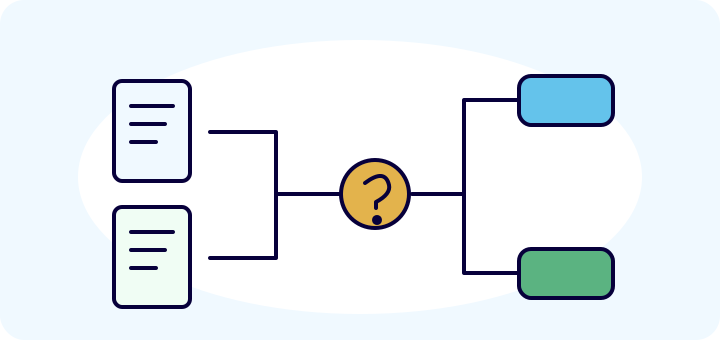
The campaign review ends with a familiar request: try a different headline next time. The team has a report of impressions, clicks and meetings, but nobody agreed what the campaign was meant to teach. The new headline is a reasonable idea. It is also another guess.
Design a campaign hypothesis around a decision you are prepared to change. Name the audience, the belief you want to test, the response that would be useful evidence and the point at which you will review it. Then make the campaign narrow enough that the result can inform that decision. The goal is a better next choice, not a scientific label attached to ordinary production.
This approach is particularly useful when budget, audience size or sales capacity limits the amount you can learn. A small campaign may produce valuable questions and still be too small to identify a reliable winner. Both facts can be true, and the next action should reflect them.
Begin with a choice that matters
“We want more engagement” does not identify a decision. “We need to decide whether operations leaders respond more usefully to a workflow example or a broad efficiency claim” gives the campaign a job. The team can compare the resulting questions, visits and conversations, while recognizing the limits of the available sample.
Choose the smallest consequential uncertainty. It might concern the audience, the problem being described, the offer or the next step. Testing all four at once can compare two complete motions, but it will not tell you which difference explains the result. That may be acceptable if the decision is between those whole motions. Be explicit.
Also ask whether the team can act on the answer. If both outcomes lead to the same budget, same message and same follow-up, the test is unlikely to deserve special production effort. A useful hypothesis sits next to a resource or creative choice that the owner has authority to make.
Write the decision first and the hypothesis second. This reverses the common habit of producing attractive variations and only later inventing a reason to compare them.
State the mechanism you think will matter
A good hypothesis explains why a change might help. Suppose the team believes RevOps leaders struggle to judge a managed service from broad promises. A concrete account-preparation example may make the work easier to evaluate and prompt more specific questions about fit.
The mechanism is understanding, not simply attention. That suggests what to inspect: do people ask about their own workflow, the inputs needed, the review step or the operating responsibility? A higher click count may be useful, but it does not establish that the intended understanding improved.
Keep alternative explanations visible. One asset may receive better distribution, reach a different audience or appear during a relevant event. The sales team may follow up more carefully on one group. Those differences can make the campaign operationally better while preventing a clean claim about the headline alone.
You do not need to stop all learning because perfect control is unavailable. You do need to describe what the evidence supports. “This version prompted three specific workflow questions” is a useful observation. “This message is proven to convert RevOps leaders” is a much larger claim.
Work through a fictional campaign before creating assets
Imagine a fictional B2B team choosing how to introduce a managed account-preparation service. Its approved audience is a small set of relevant operations leaders. The team has two possible openings: a broad capacity promise and a concrete example of a manager reviewing a prepared account brief.
The decision is whether the next campaign should lead with the specific workflow. The team keeps the destination, offer and follow-up practice consistent, and varies the opening creative. It agrees to examine qualified workflow questions and verified walkthrough visits, with impressions and clicks used to understand delivery rather than declare success.
After the agreed observation period, the workflow creative has generated two detailed questions and the broad creative one. The counts are too small for a confident comparative winner. However, both workflow questions concern the same unresolved issue: which sources the service needs before it can prepare the brief.
The responsible decision is to improve the source explanation and run a further comparable campaign, while retaining the result as directional evidence. The team does not multiply two questions into a conversion forecast or declare the broad message ineffective. It has learned what buyers need to understand next, even though the performance comparison remains inconclusive.
This example uses fictional observations. Its value is the decision discipline: a modest amount of evidence changes one useful piece of the campaign without becoming an inflated claim about the market.
Put the learning agreement in the brief
The brief should say what counts as the relevant response and how it will be verified. Define a qualified question in terms of its substance, not the seniority of the person alone. Identify the actual destination for visits and the record used to confirm a held meeting. Agree the observation period around the response you expect, including its likely lag.
Set a review point and a practical stopping condition. A campaign may stop because the audience is exhausted, the receiving team cannot handle the work, or the evidence exposes a claim that needs correction. These are operating decisions, not statistical conclusions. Do not hide them behind a promise to “wait for more data.”
Preserve version identity. If the team changes the audience and the message halfway through, record a new comparison period rather than pooling everything as if the campaign were unchanged. Likewise, keep Page totals separate from individual-post results and use actual asset identifiers when comparing assets.
In HubSpot, campaign asset associations help organize the reporting context. Its documentation, updated September 11, 2026 and checked October 16, warns that campaign influence history has specific persistence rules. Choose associations deliberately before interpreting the report. An association is not a controlled test or proof of causation.
Use agents to prepare a coherent test
RevTech's Campaign Management Agent can prepare campaign briefs, audience segments and text assets from the customer's objectives, audience context and approved messaging. Marketers shape the argument and approve the work. This can reduce the assembly involved in producing coherent variants and keeping them tied to the same brief.
The marketer still owns the hypothesis. An agent can draft ten alternatives without knowing which business decision makes the comparison worthwhile. State the chosen variable, the elements that must remain consistent and the evidence the reviewer should check. Review the variants together so a local copy improvement does not accidentally change the offer or audience.
RevTech's current Revenue Intelligence and Analyst work can prepare answers from agreed sources. The team must still inspect the population, dates and meaning of the measures. Neither campaign generation nor a polished analysis turns a tiny sample into a reliable performance result.
End with a decision that preserves what you learned
At the review, write three short statements: what was observed, what it suggests and what you will do next. Keep them separate. This makes it easier for another teammate to understand why the next campaign changed without inheriting an overstated conclusion.
Continue when the question remains useful and the evidence is still developing. Revise when a specific barrier or misunderstanding appears. Stop when the audience, offer or operating cost no longer justifies the work. There is no requirement to name a winner before making a responsible choice.
For your next campaign, bring the planned decision to the first creative meeting. Ask what response would change your mind and whether the campaign can realistically produce that evidence. That conversation gives creative work a clearer purpose and gives the eventual results somewhere useful to go.
Frequently asked questions
Put the framework to work
Explore the operating model.
Turn the brief into reviewable content
Carry the agreed question through production and review.
ExploreCampaign Management Agent
Explore managed campaign preparation from approved context.
ExploreRevenue Intelligence
Inspect evidence behind the next business decision.
ExploreHubSpot campaign asset associations
Primary documentation, updated September 11, 2026; checked October 16, 2026.
ExploreKeep reading.

Preserve the event conversation in the sales handoff
The event handoff should carry the conversation the buyer expects you to continue, alongside the record of their attendance.
Read
Investigate declining customer usage before choosing a response
A usage decline is a reason to investigate what changed in the customer’s work before deciding which intervention will help.
ReadSee how the work gets done.
Explore how agents prepare work across your revenue teams, and how people review it, guide it and decide what happens next. Fictional data. Real product.
Explore the demo