Blog
An old opportunity needs a disposition, not another close date
Moving the date can keep a record open without keeping a buying project alive.
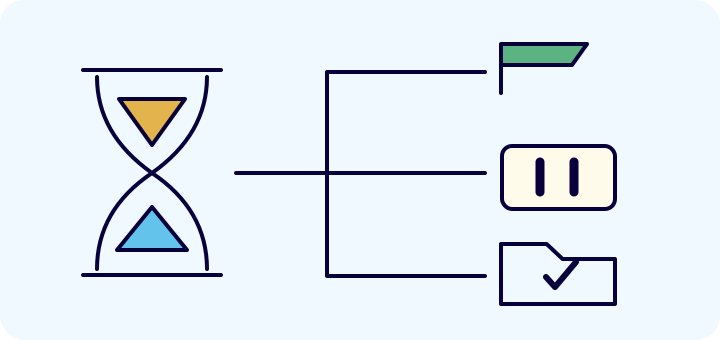
The opportunity is 140 days old. Its close date has moved three times. The last note says the buyer is still interested, and the seller plans another check-in. Nobody wants to lose a possible deal, so the record stays in active pipeline and the next close date moves forward.
An aged opportunity needs a disposition based on the current buying project: continue with a credible milestone, pause for a named condition, or close the current pursuit with an honest reason. Age is a prompt to inspect, not an automatic verdict. The decision should explain what the team will do next and why the opportunity belongs in its current operating state.
Separate slow buying from absent buying
A complex purchase can take a long time while making real progress. Security review, a planned budget cycle or an agreed evaluation may justify a long interval. The relevant question is whether the buyer still has a project and a plausible path through the next decision.
Recent seller activity does not establish that. A sequence of outbound messages can make a record look busy while the buyer’s priorities remain unknown. Conversely, a quiet period can be expected when a customer has explicitly said that a committee meets next month.
Ask for the latest buyer-confirmed objective, the next meaningful milestone, the person who owns it and the evidence supporting the timing. If these are missing, the manager has a discovery question rather than a reliable close-date update.
Three fictional opportunities need different treatment
Alder has completed its technical evaluation and is waiting for a procurement committee scheduled in three weeks. The buyer has confirmed the required documents and the person presenting the request. It may remain active, subject to the team’s normal forecast rules. Its age does not erase the current evidence.
Birch has a relevant problem but has explicitly paused the initiative until a system migration finishes. There is no current purchase decision. The team records a pause condition and a responsible owner, using whatever state the CRM and reporting policy support. The opportunity should not remain in near-term forecast simply because the account is attractive.
Cedar has not responded to the agreed follow-up, and the seller cannot establish whether the project continues. The manager may close the current pursuit under company policy with an outcome such as unconfirmed or unable to establish active project. That does not prove the buyer rejected the offer, and it does not authorize endless future outreach.
These examples are illustrative dispositions, not universal aging thresholds. The distinction is the state of the buying project and the next permitted work.
Make a pause more specific than “later”
A useful pause records what must change, how the team expects to learn about it and when the assumption will be revisited. “Budget next year” is incomplete if nobody knows whose budget or which planning event matters.
Do not turn every speculative possibility into a permanent monitored account. Decide which future signals are reliable enough to justify attention, whether the customer has asked for a future conversation and who will review any return. If there is no credible re-entry condition, closing the current pursuit may be more honest than maintaining a pause indefinitely.
Preserve the history. A closed opportunity can still provide useful account context if the buyer returns. The reopening policy should determine whether that return continues the same project or begins a new one.
Run the review without rewarding cosmetic cleanup
Start with a bounded group of aged opportunities in one comparable motion. Let sellers bring context before managers assign a disposition. A bulk instruction to close everything older than a threshold can remove legitimate projects and encourage people to reset dates or recreate records.
Inspect the resulting work, not only the reduction in open pipeline. Continued opportunities should have a credible next milestone. Paused ones should have a specific return condition. Closed ones should retain a defensible reason and the prior history. A cleaner coverage multiple is not the purpose if it leaves the team less informed.
Watch for a common cause across cases. If opportunities repeatedly become old before a buyer-defined project exists, the opportunity-creation threshold may need attention. If they stall at the same valid milestone, the business may need specialist capacity or a different customer process. The disposition review can reveal a system problem without pretending every old deal has the same cause.
Use inspection to start a conversation
RevTech’s Sales Agent checks in-scope deals against authored process and service-level rules, flags stalled stages and aging commitments, and routes exceptions with evidence. Owners decide whether to resolve, waive or escalate. A flag is a starting point for this review, not an automatic instruction to close the deal.
At the next pipeline meeting, replace “What is the new close date?” with “What current buying project does this record represent, and what happens next?” If the answer supports continuation, keep the work visible. If it does not, choose the appropriate state and preserve the relationship honestly.
Put the framework to work

See how the work gets done.
Explore how agents prepare work across your revenue teams, and how people review it, guide it and decide what happens next. Fictional data. Real product.
Explore the demo