Blog
An account hierarchy is not a buying-authority map
The parent company on the record may not be the organization making the purchase.
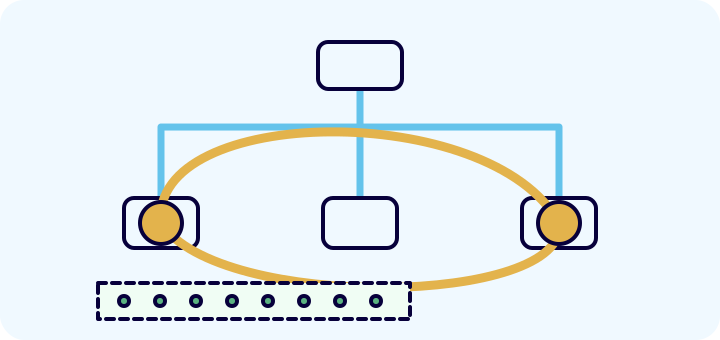
The account tree shows a global parent and six subsidiaries. A seller treats that as one enterprise opportunity. Then one subsidiary buys locally, another requires a central security review and a third operates under a separate service agreement. The corporate tree was accurate. The buying assumption was not.
Use an account hierarchy to describe organizational relationships, and maintain buying authority and delivery scope as separate questions. A parent–child association does not establish who can approve a purchase, which entities share an agreement or whether one account owner can speak for every relationship. RevOps needs a model that preserves those distinctions without asking sellers to become corporate researchers before every conversation.
Three maps answer three different questions
The corporate map describes how organizations relate. The buying map describes who can decide on this purchase. The delivery map describes where the resulting service will be used and supported. Sometimes all three align. Often they differ in ways that change the next action.
HubSpot’s parent–child company documentation, updated January 21, 2026 and checked October 23, describes association labels between company records. That supports a structural representation. It does not establish a commercial rule that every child inherits the parent’s purchasing authority, ownership or agreement.
Keep the business interpretation explicit. If central procurement negotiates a framework but local departments decide whether to buy, record both. If one security review covers several entities, confirm its actual scope rather than treating the association itself as proof. The appropriate commercial and legal owners interpret agreements; a hierarchy diagram cannot do that work.
A fictional account exposes the difference
Imagine Alder Group owns Alder Manufacturing and Alder Logistics. Group IT sets common security standards. Manufacturing has its own operating budget and wants a workflow for one regional team. Logistics already uses a different supplier and has no current project.
The corporate map contains one parent and two children. The buying map for the current opportunity includes Manufacturing’s operations sponsor, its budget owner and Group IT’s reviewer. The delivery map initially contains only the regional team. A group-level conversation may be useful, but it does not make Logistics part of the purchase.
The seller records the opportunity against the entity and commercial structure agreed under company policy, preserves the relevant group associations and names the actual decision participants. Marketing can coordinate around the broader account without calling every subsidiary an active buying group. Customer success can plan for the team that will receive the service rather than an imagined global rollout.
Now suppose the parent offers to negotiate a group agreement. That is a material change to investigate, not proof of expansion. Which entities can order under it? Who decides to participate? Does the original regional project remain independent? The record should follow the answers, not the attractiveness of a larger potential amount.
Assign responsibility at the level of the work
A group account owner may coordinate the relationship while an opportunity owner manages a local buying project. A customer-success owner may cover a different delivery footprint. Those responsibilities can coexist if the company defines who resolves conflicts and which customer communications require coordination.
Avoid forcing every responsibility into one owner field. That makes the CRM easier to filter while transferring ambiguity to people. Use the supported relationships and roles your systems can maintain reliably, and document any limitation rather than improvising a new association for every exception.
A useful account review asks who owns the next conversation, who can approve the purchase, who will receive the service and who coordinates the wider relationship. If those are different people, the brief should make that visible. It should also say which answers are confirmed and which are still assumptions.
Protect rollups from duplicate commercial value
A parent view can summarize child activity without turning every related record into additional pipeline. Count each opportunity once in the relevant financial view. Keep local and group proposals distinguishable when they represent alternatives to the same purchase.
When a group opportunity replaces several local possibilities, reconcile the affected records and preserve why the view changed. Otherwise a portfolio can appear to grow because the same proposed purchase is represented at two levels. Conversely, aggregating everything to the parent can hide which team actually needs help.
RevTech’s Customer Context brings connected accounts, people, opportunities and ownership into the working context. It can support the preparation for these questions within the agreed sources. It does not make an inferred corporate relationship into verified buying authority.
Take one complex account and draw the three maps separately before changing ownership or rolling up pipeline. Where the maps diverge, write the commercial question that needs answering. Those differences are often where a useful customer conversation begins.
Put the framework to work
Explore the operating model.
Account reassignment customer continuity
Separates legal structure, purchasing authority and delivery footprint, before owner assignment.
ExploreCustomer Context
Review the current scope and responsibilities relevant to this article.
ExploreHubSpot: Parent and child company associations — updated January 21, 2026; checked October 23, 2026
Primary source for the specific factual context identified in the article.
Explore
See how the work gets done.
Explore how agents prepare work across your revenue teams, and how people review it, guide it and decide what happens next. Fictional data. Real product.
Explore the demo