Blog
Route the new lead without restarting the account conversation
A new form submission can belong to a relationship that is already underway.
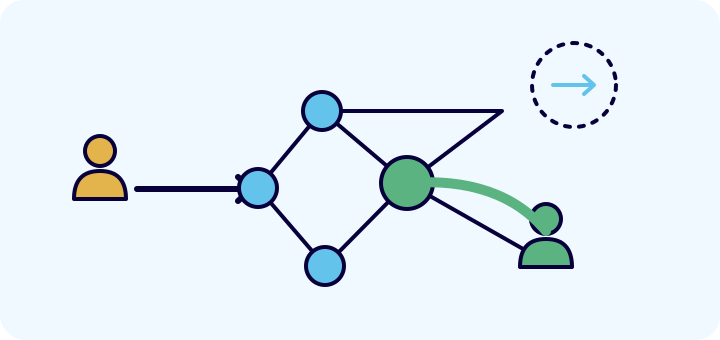
A security lead submits a form while their company is evaluating your service. The inbound system assigns the person to the next available seller. The account executive discovers the new conversation only after the buyer receives a second discovery invitation. The route was technically valid and commercially awkward.
Resolve the account relationship and the purpose of the request before applying net-new lead distribution. Existing customers, active opportunities and group-company relationships need explicit precedence rules and a fallback for uncertainty. The right outcome is a named person who can respond with context, not simply a populated owner field.
Distinguish record ownership from response ownership
A contact owner, account owner, opportunity owner and specialist response owner can be different people. A security question may need a specialist answer coordinated by the account executive. A customer’s billing question may belong with service or finance rather than acquisition Sales.
Write the rule around the requested work. “Existing customer goes to account owner” is a useful starting point, but it may still delay a support request if the owner is unavailable or the issue belongs in a dedicated service channel. The relationship owner should remain informed without becoming the only person who can act.
Likewise, a contact associated with an open opportunity is not necessarily participating in that buying project. Confirm the relevant entity and purpose. A multinational company can have several independent motions. The relationship rule should coordinate them, not collapse them into one indiscriminate queue.
Use a precedence ladder with an exception path
A proposed design begins by respecting an explicit service or support request. Next, identify a confirmed relationship to an active buying project or current customer motion. Then apply the approved account-ownership policy. Only genuinely net-new, eligible inquiries reach the normal distribution rule.
That order is a design proposal, not a universal policy. Your business may need different handling for channel relationships, regulated accounts or separate products. The important requirement is that the precedence is written and conflicts have a named resolver.
If identity is ambiguous, preserve the inquiry and route a bounded question to the fallback owner. Do not merge company records or assign a sensitive conversation based only on a similar name. The fallback needs enough context and a response expectation so ambiguity does not become abandonment.
Four fictional inquiries test the meaning
A known evaluator asks for a technical document about the active project. The account executive coordinates the response and brings in the right specialist. The person does not receive a fresh generic discovery sequence.
A current customer asks about a second use case. The relationship owner and commercial team agree who explores it, using the existing expansion-ownership policy. The form itself is a signal to investigate, not proof that a qualified expansion opportunity exists.
A contact at a subsidiary asks about a local project while the parent has an unrelated opportunity. The intake goes to a relationship review that confirms whether the projects are connected. Corporate association alone does not settle ownership.
A net-new prospect matches the target criteria with no existing relationship. The ordinary eligible-lead route applies. The exception policy should not make this straightforward case wait for unnecessary account research.
These examples expose business decisions a routing simulation should test after the policy is settled. A technically successful simulation cannot tell the company which relationship it intends to protect.
Carry the request, not only the assignment
The receiving person needs the original inquiry, the matched account and the reason for the route. Include relevant open commitments and any unresolved identity question. Otherwise they may respond as if the person arrived without history, even when the owner field is correct.
Define acceptance and absence coverage. If the intended owner is away, who can acknowledge the request and obtain the substantive answer? A relationship-aware route that leaves the buyer waiting indefinitely is not a good result. Keep the current owner’s responsibilities visible while providing a practical backup.
Review misroutes by cause: identity mismatch, unclear request, stale ownership, conflicting rules or failed acceptance. Each points to a different correction. Do not describe every misroute as poor lead quality.
Make the agent follow an agreed relationship policy
RevTech’s Lead Management Agent enriches and researches eligible records, scores them against the customer’s model, routes ownership and prepares messaging under configured rules. Confirm the actual matching inputs, precedence and exception behavior for the proposed workflow. The service should not invent a hierarchy rule when two owners disagree.
Before launching the next form, walk through one existing customer, one active opportunity, one subsidiary and one ambiguous match. Ask the receiving teams to explain why each route fits the person’s request. Then use the existing lead-flow testing guidance to verify that the implementation follows that policy.
Put the framework to work

See how the work gets done.
Explore how agents prepare work across your revenue teams, and how people review it, guide it and decide what happens next. Fictional data. Real product.
Explore the demo