Blog
Reopen the deal or create a new opportunity?
A returning buyer should not force RevOps to choose between a clean pipeline and an honest history.
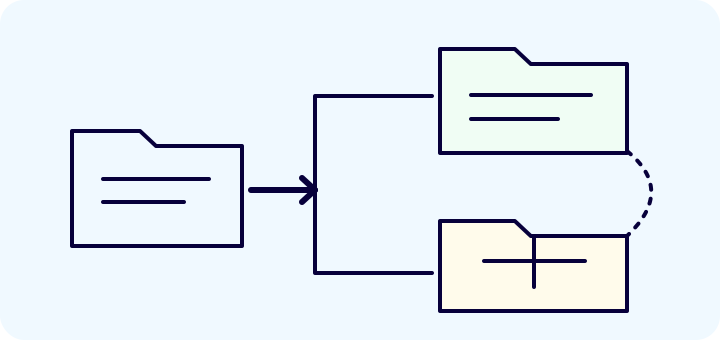
A buyer returns three months after an opportunity was closed lost. The seller changes its stage back to discovery, updates the amount and puts a new close date on it. The pipeline is active again. The old loss has disappeared from one report, and the sales-cycle calculation now spans two different buying projects.
Set a reopening policy around continuity of the buying decision. If the original project genuinely resumes, retaining the opportunity may be appropriate under your reporting model. If the scope, buying authority or commercial decision has materially changed, a new linked opportunity usually tells the story more clearly. Preserve the prior outcome either way. A record edit should not silently rewrite what the business knew at the time.
Identify what actually resumed
Start with the buyer’s current statement, not the fact that they replied. What problem are they trying to solve now? What changed since the earlier decision? Who owns the project, and what purchase would be approved?
A response such as “Send the latest information” may justify a conversation without justifying active pipeline. Use the organization’s existing opportunity-creation threshold. The reopening policy should not become a side entrance that lets old accounts bypass current qualification.
Look for continuity across the project’s objective, scope, decision group and commercial path. There is no universal number of changed fields that determines the answer. A new contact can inherit the same funded project; the same contact can start a completely different one. Business meaning matters more than how many CRM values differ.
Two fictional returns lead to different records
In the first case, a buyer postponed a defined rollout while a required internal system was being upgraded. The same sponsor returns after the upgrade, with substantially the same scope and approval path. The company’s policy allows a documented reopening when the prior buying project resumes. The record retains the earlier close-out, reason and dates in the available history, and records the new active period explicitly.
In the second case, a department that rejected a small pilot returns a year later after a merger. A new executive now wants an organization-wide deployment, with a different budget owner and evaluation process. A new opportunity linked to the old account history is clearer. The previous pilot remains a lost decision; the new project is assessed on its own evidence.
Neither approach should inflate the pipeline. There is one current buying project in each example. If the old opportunity remains open while the new one is created, the team must reconcile the duplicate commercial amount rather than counting both until someone notices.
Agree the reporting treatment before the first exception
RevOps should write down how reopened opportunities appear in created-pipeline, win-rate and duration reporting. An operational reopening may need one treatment in the current pipeline and a separate, preserved treatment in historical cohorts. Decide with the reporting owner; do not rely on a default chart to express an unstated policy.
Keep the original creation date and closed decision recoverable. If a metric needs the beginning of the renewed buying effort, use an explicit event or supported field rather than overwriting history to shorten the cycle. Where the system cannot represent the intended distinction reliably, use a simpler documented policy and disclose the analytical limitation.
The CRM’s property history can help investigate past values, but it is not a complete record of buyer intent. Retain the source that explains why the opportunity returned. A brief buyer-confirmed statement is more valuable than a mechanically populated “reopened” flag.
Make ownership and permission current again
A previous owner may have left, the account may have moved territory, or the customer may now have a different relationship team. Resolve who carries the next conversation and what context they need. Do not restart an old message sequence simply because an opportunity is open again.
Check the latest customer preferences and the current treatment rules. The fact that someone once evaluated an offer does not authorize every future action. An explicit request to discuss the project provides a specific next step; broader outreach still follows the organization’s applicable permissions and policies.
RevTech can prepare connected account history and inspect in-scope opportunities against authored process rules. That can help an owner see the earlier decision and the new evidence. The agent should not decide that two buying projects are equivalent or alter historical reporting definitions on its own.
Keep the policy small enough to use
Test it on a few real patterns: a short postponement, a new business unit, a materially changed scope and a returning contact without a project. For each, state the record decision, historical evidence to preserve and condition for active pipeline.
The goal is not to maximize reopened opportunities or keep the database visually tidy. It is to let a manager understand what the buyer is deciding now without losing what happened before. A clear continuation policy protects both the seller’s next conversation and the company’s ability to learn from its history.
Put the framework to work
Explore the operating model.
Closed lost no decision review
Record identity and historical comparability on return, not retrospective loss diagnosis or outreach sequence design.
ExploreRevTech for RevOps
Review the current scope and responsibilities relevant to this article.
ExploreCustomer Context
Review the current scope and responsibilities relevant to this article.
ExploreHubSpot: View record property history — updated October 16, 2026; checked October 23, 2026
Primary source for the specific factual context identified in the article.
ExploreKeep reading.
Set pipeline creation targets from the buying calendar
Pipeline created too late can be valuable without belonging in this quarter’s recovery plan.
Read
Resolve a partner and direct-sales conflict before the buyer feels it
Protect the buyer conversation while the company resolves its internal commercial rules.
ReadSee how the work gets done.
Explore how agents prepare work across your revenue teams, and how people review it, guide it and decide what happens next. Fictional data. Real product.
Explore the demo