Slide 1 of 4
Recovering capacity is the easy half
It happens more or less automatically. Directing it does not, and unclaimed capacity is reabsorbed by whatever is loudest.
Hold the organization to the second half of the capacity argument — not just that hours were recovered, but that they went somewhere you chose.
The ROI case in the first module was built on recovered capacity going somewhere specific. That destination is the part that quietly disappears, because recovering the hours is largely automatic (the work stops being done manually) while directing them takes an active decision that nobody is individually responsible for making.
Capacity that nobody claims does not sit idle. It gets absorbed by whatever is most immediately noisy: more internal meetings, faster response to inbound, a general reduction in pressure. None of those are bad, and none of them are what you told the board you were buying. The gap between the case and the outcome is not usually that the hours were not recovered; it is that nobody decided where they went.
Make it one question with two halves, asked at the same time, every time. How much time was recovered and how do we know, which requires a measurement rather than an impression. And what is being done with it that was not being done before, which requires a named activity rather than a feeling that things are calmer.
Asking only the first half is how organizations end up with a well-evidenced efficiency claim and no observable change in what the team accomplishes. That is also the version that ages badly: it is impossible to defend a second year of investment on hours saved when nobody can point at what those hours produced.
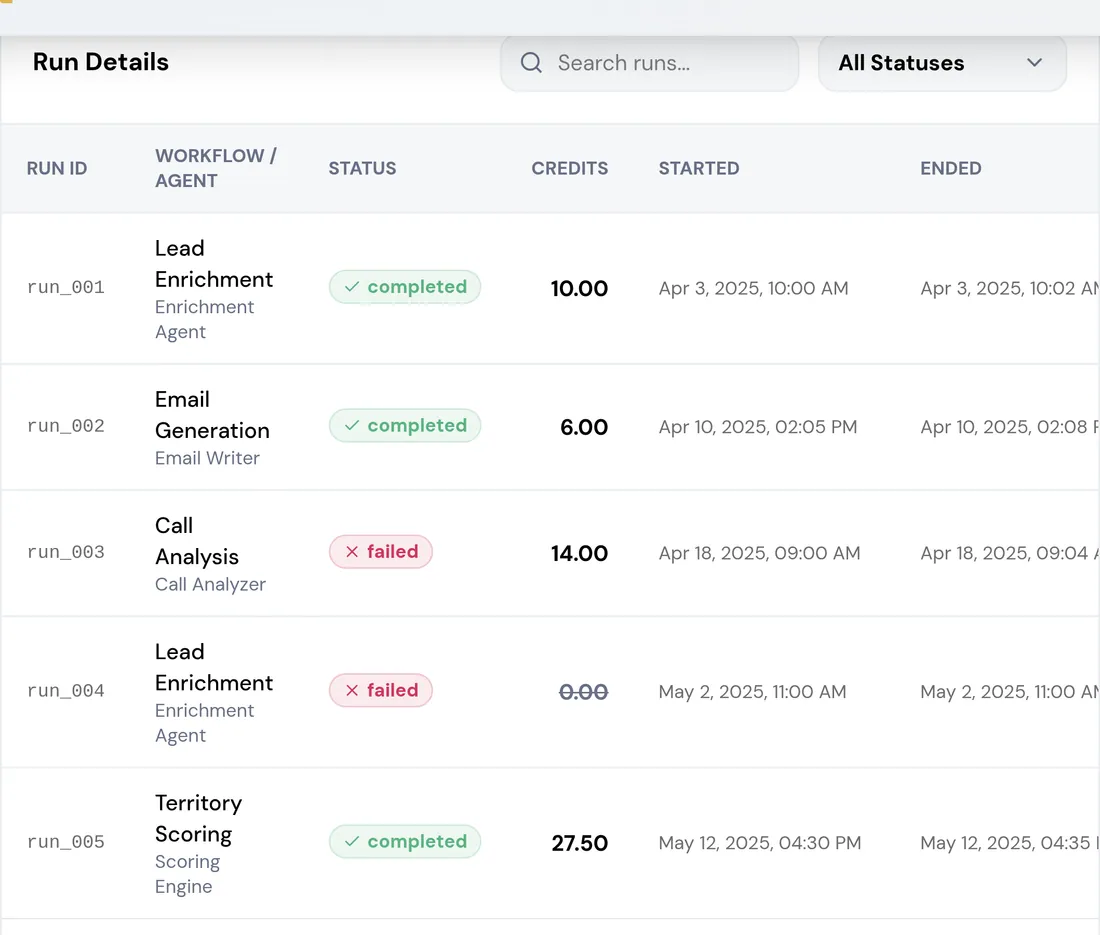
The practical fix is to name the destination in advance, at the point of making the case rather than at the point of reviewing it. More accounts per rep, coverage of a segment that currently gets none, renewals started a quarter earlier, more time in front of customers, each connects to a metric already being tracked, which is what makes the claim checkable later.
Retrofitting a destination after the fact is both weaker and obviously so. If capacity was directed at covering more accounts, then accounts per rep should be measurably up; if it is not, the honest conclusion is that the hours went somewhere else, and finding out where is more useful than constructing an explanation. Holding the organization to that standard is most of what makes a capacity argument credible the second time you make it.
A team makes the case on four hours a week per rep recovered from manual research and CRM upkeep, directed at covering more accounts. Twelve reps, so roughly forty-eight hours a week, framed as a meaningful increase in coverage.
Two quarters later the hours are demonstrably recovered. Time spent on research is down, the CRM work is largely gone, and nobody disputes the efficiency claim. Accounts per rep is unchanged.
What happened is not mysterious and is rarely anybody's fault. The recovered time was absorbed by things that were already under-served: longer preparation for the meetings reps already had, faster response to inbound, more internal coordination, and a working week that simply felt less frantic. Every one of those is a real improvement. None of them is more coverage, and more coverage is what was promised.
The failure was not in the execution. It was that "covering more accounts" was never converted into a target anybody owned, so no manager was ever in the position of having to choose between a rep preparing better for existing meetings and a rep opening new accounts. Absent that choice, the comfortable option wins every time, quietly, without anyone deciding.
The correction is not to police how people spend recovered time, which is both unpleasant and unworkable. It is to attach the destination to a metric that was already being tracked, and then ask about that metric on the normal cadence.
If capacity was directed at coverage, then accounts touched per rep should be up, and it is a number that already exists. If it was directed at earlier renewal engagement, then the average days between the start of renewal work and the renewal date should be growing. If it was directed at more customer-facing time, then meetings per rep should be up. In every case you are asking about an outcome the business already measures rather than auditing anybody's calendar.
That also gives the team a fair way to disagree with you. If accounts per rep is flat and they believe the recovered hours went somewhere more valuable, that is a real argument worth having, and it is a much better conversation than one where nobody can say where the time went at all.
You should be able to answer each of these from memory before opening it. Recalling the answer is what makes it stick; recognizing it when you read it does not.
The destination. Recovering the hours is close to automatic once the work stops being manual; directing them takes an active decision that nobody is individually responsible for making.
It gets absorbed by whatever is loudest: more internal meetings, faster inbound response, a general drop in pressure. None of those are bad and none are what you told the board you were buying.
Because retrofitting one afterward is indistinguishable from claiming credit for whatever happened anyway, and it is obviously so to the people you are presenting to.
It happens more or less automatically. Directing it does not, and unclaimed capacity is reabsorbed by whatever is loudest.
Decide where recovered hours go before they exist. Retrofitting a destination is indistinguishable from claiming credit for whatever happened anyway.
If capacity went to covering more accounts, coverage should be measurably up. If it is not, the hours went somewhere else.
See agents carry the repeatable work of GTM across sales, marketing, customer success, and RevOps. Every action prepared, reviewed, and recorded. Fictional data, real product.
Explore the demo