Turn every signal
into GTM action.
Your programs were never the constraint. What happens after the signal was. Fully managed AI agents carry demand from signal to owned next step, so every lead reaches the right person with the work already prepared.
In short
What is RevTech for marketing teams?
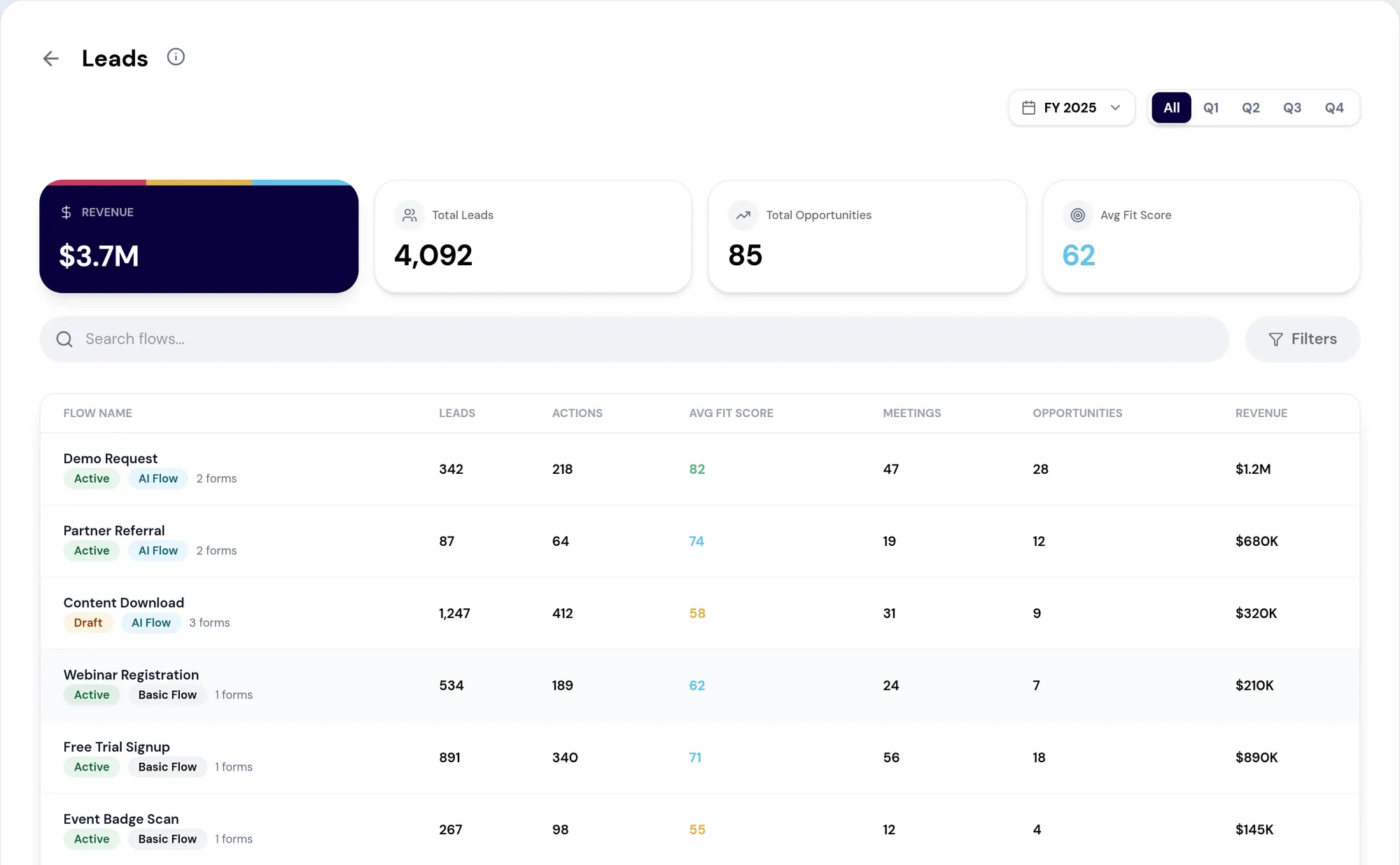
RevTech runs fully managed AI agents on the far side of your programs. Every lead, campaign response, and account signal is triaged against fit, ownership, and opportunity context; the next action is prepared and routed to a named owner; and the handoff is tracked until it becomes pipeline. Your marketing automation keeps running campaigns, your CRM stays the system of record. What disappears is the leakage after the signal.
Nothing qualified goes stale
Leads, campaigns, events, intent, and account activity land in one shared context, triaged against your fit and ownership rules the moment they arrive.
Demand arrives ready to work
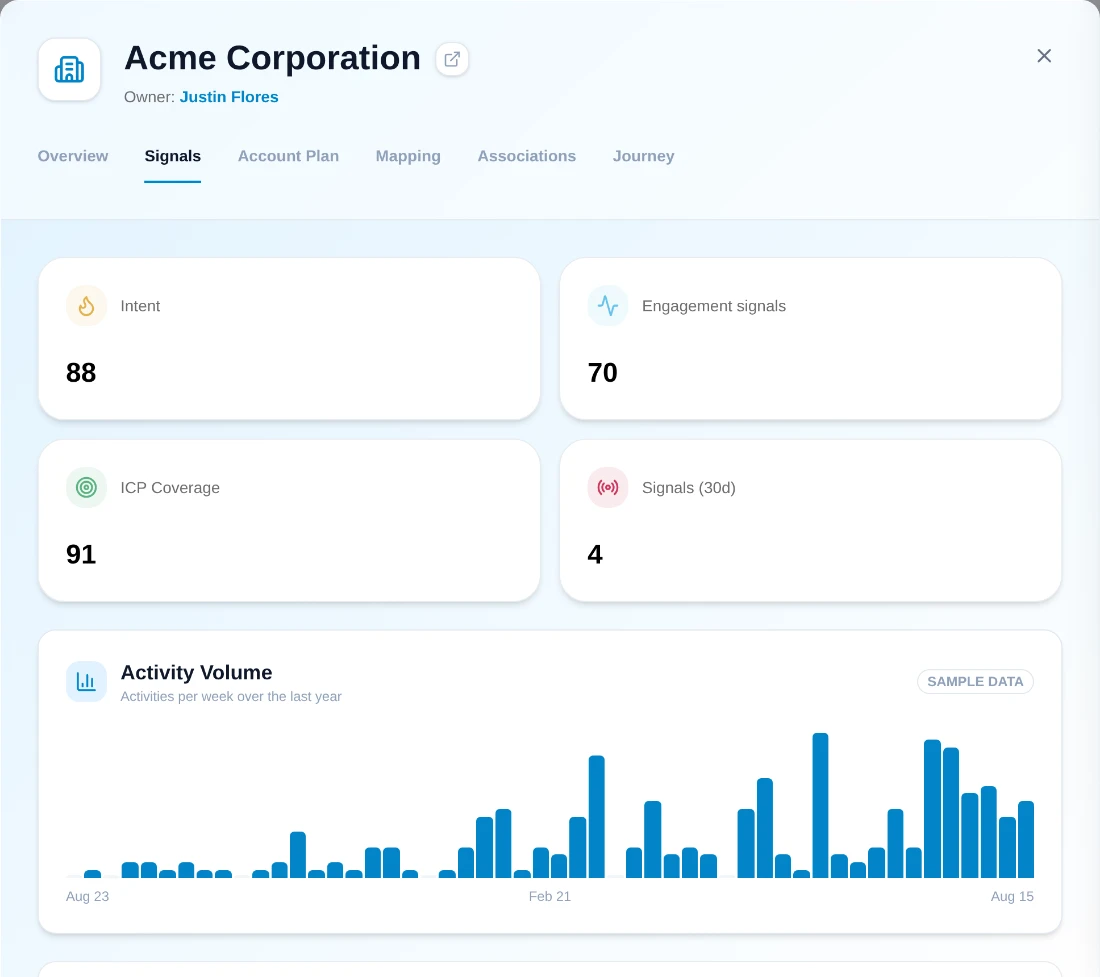
The right owner gets the signal with the context, recommended play, and prepared next step attached, not a bare lead record to decode.
- Pricing page, 3 visitsHigh intent
- Webinar attendedEngaged
- Matches ICP91% fit
Follow up with this lead while intent is live
Northwind Traders · routed to demand gen
- Chosen by
- Your routing rules
- Context attached
- Account and activity
The outbound draft waits for a marketer to approve it
Sample data · illustrative account
See what demand became
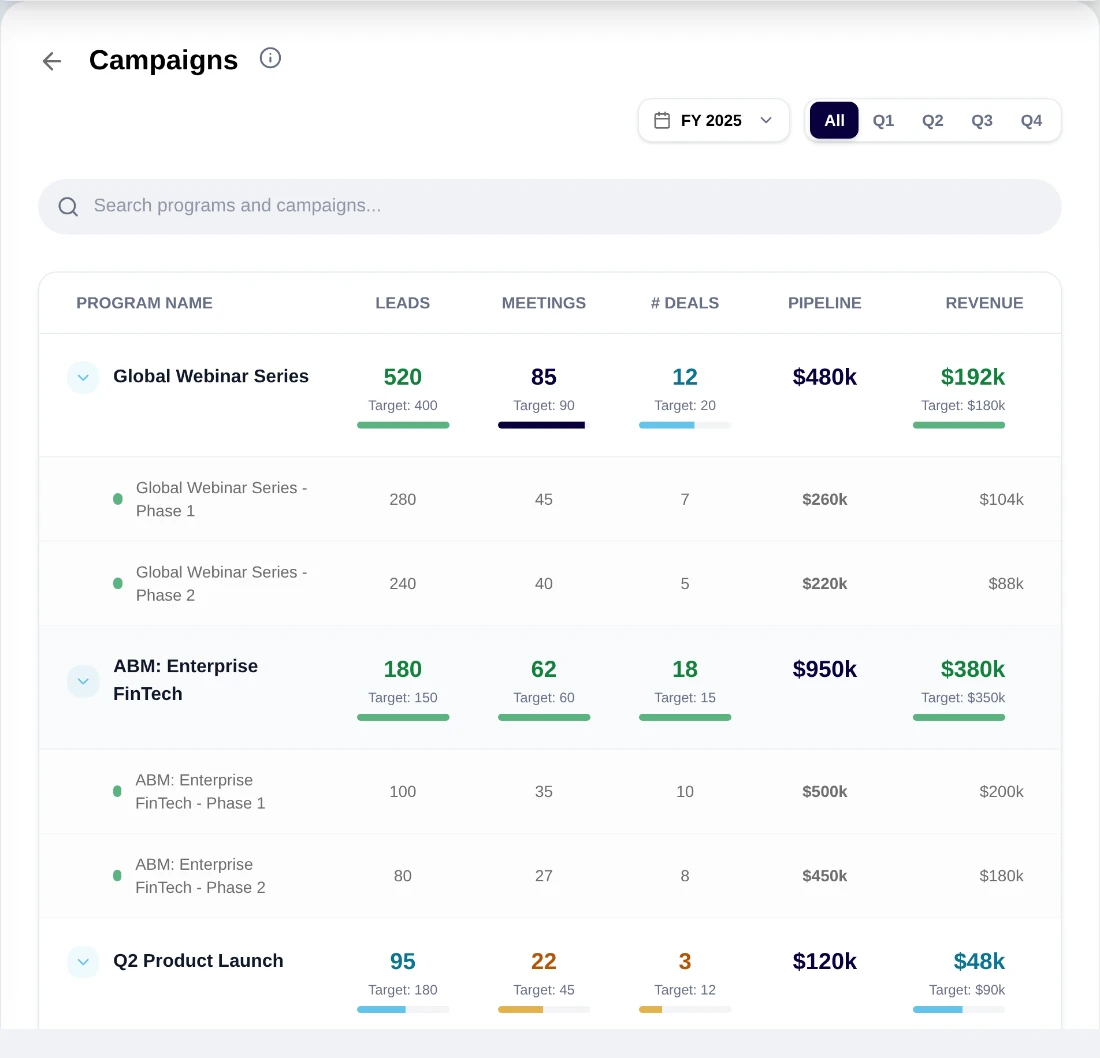
Acceptance, follow-up, exceptions, and movement from signal to pipeline are measured in the same system, so marketing is judged on pipeline, not activity.
Workflow field guide
Nine governed marketing workflows that create owned action
Each workflow starts with a defined signal, uses approved context, prepares a bounded next step, waits at the right human boundary, and carries a failure path. The aim is not more agent activity. It is trustworthy completion that marketing and RevOps can inspect.
| Workflow | Trigger | Context | Prepared action | Human boundary | KPI | Failure path |
|---|---|---|---|---|---|---|
| Inbound lead triage | A new inbound lead is created. | Identity, source, fit, territory and existing account or opportunity. | Resolve the record, explain priority and route the recommended next step. | RevOps reviews unresolved identity or ownership exceptions. | Accepted leads, routing time and leakage. | Duplicate or ambiguous identity routes to an exception queue. |
| High-intent account response | An account crosses an agreed intent threshold. | Recent engagement, account fit, open opportunities, ownership and exclusions. | Assemble the evidence and prepare the permitted account play. | The account owner chooses whether and how to engage. | Accepted plays, time to action and opportunity creation. | Weak evidence or an active customer motion suppresses the play. |
| Event follow-up | A known person attends or engages with an event. | Session, role, account, consent, history and current owner. | Summarize relevance and draft the next approved follow-up path. | A person approves customer-facing outreach. | Follow-up completion, acceptance and progression. | Missing consent or ownership prevents outreach. |
| Campaign handoff | A response meets the campaign handoff rule. | Campaign, content, lifecycle, account, opportunity and routing policy. | Package the signal with the recommended sales, nurture or partner path. | The receiving owner accepts or rejects with a reason. | Acceptance, SLA attainment and pipeline progression. | Rejected handoffs return to marketing with a reason code. |
| ABM account orchestration | A target account enters an active buying window. | Buying committee, engagement, open work, ownership and account plan. | Prepare coordinated marketing and sales tasks with one account narrative. | Account and campaign owners approve the coordinated motion. | Account engagement, accepted actions and opportunity movement. | Conflicting motions pause execution until owners resolve scope. |
| Lead nurture re-entry | A nurtured contact shows a new qualifying signal. | Prior disposition, recent behavior, suppression rules and account status. | Explain what changed and recommend re-entry or continued nurture. | Lifecycle owner approves exceptions and sensitive transitions. | Re-entry acceptance, speed and downstream conversion. | No meaningful change keeps the contact in nurture. |
| Content-to-opportunity signal | A known account consumes high-intent content. | Content topic, account role, opportunity stage and recent seller activity. | Brief the opportunity owner on the signal and possible next question. | The seller decides whether the signal changes the customer conversation. | Brief acceptance, usage and opportunity progression. | Low-confidence identity or duplicate activity is excluded. |
| Partner-sourced routing | A partner submits or influences a demand signal. | Partner, account hierarchy, registration, duplicate and territory rules. | Resolve ownership, prepare the registration context and route the handoff. | Partner operations reviews conflicts or duplicate claims. | Routing time, duplicate rate and partner-influenced pipeline. | Ownership conflict stays blocked until the accountable owner decides. |
| Campaign SLA recovery | An accepted signal misses its follow-up SLA. | Original signal, assigned owner, elapsed time, current stage and exclusions. | Surface the breach, prepare the recovery action and escalate to the right owner. | A manager or RevOps owner decides reassignment or closure. | Recovered signals, breach age and recurrence. | Repeated breaches trigger process review, not endless reassignment. |
Human control
The approval flow is part of the workflow.
- 01
Detect
A defined signal enters the eligible population.
- 02
Resolve
Identity, fit, ownership and exclusions are checked.
- 03
Prepare
The agent assembles evidence and the bounded next action.
- 04
Review
A person decides customer-facing, ambiguous or consequential work.
- 05
Record
Approved work and evidence return to the system of record.
- 06
Recover
Exceptions and missed SLAs route to a named operating owner.
Data and policy
- Confirm identity and source-of-truth rules.
- Define fit, routing, suppression and ownership.
- Set permitted reads, writes and evidence requirements.
Pilot and review
- Start with one workflow and a bounded cohort.
- Inspect every output, edit, rejection and exception.
- Keep a manual fallback while acceptance criteria stabilize.
Measure and widen
- Separate service health from business outcomes.
- Review acceptance, completion, SLA and recovery.
- Widen action rights only after evidence supports it.
Implementation checklist
Design the control boundary before launching.
A practical worksheet for the trigger, context, action boundary, approval, KPI, evidence and failure path behind each marketing workflow.
Frequently asked questions
Explore the other solutions.
Four teams, one system. The same agents, context, and controls carry every revenue team's work.
Try the demo.
See agents carry the repeatable work of GTM across sales, marketing, customer success, and RevOps. Every action prepared, reviewed, and recorded. Fictional data, real product.
Explore the demo